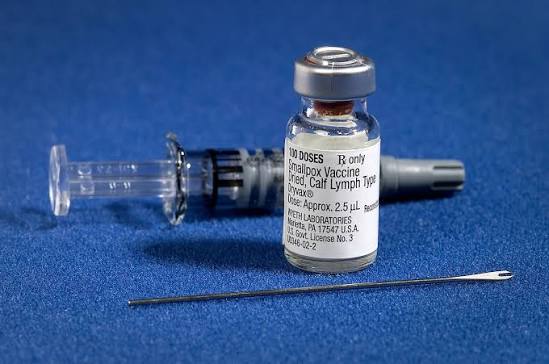
I remember when I was a kid, maybe seven or eight, running my fingers over this small round scar on my grandfather’s left shoulder. I asked him what it was, and he just said, “Smallpox vaccine. Means I’ll never get it.” I didn’t even know what smallpox was back then. I just thought it was some cool battle scar. It wasn’t until years later, when I actually sat down to research the World Health Organization for this essay, that I realized—that scar on my grandpa’s shoulder? That’s basically the WHO’s greatest trophy. But here’s the thing nobody tells you: the WHO isn’t just some perfect organization that saves the world. It’s way messier, way more human, and honestly, way more interesting than what you read in textbooks.
How It All Started
So I looked up how the WHO was founded, and honestly, I expected the usual boring stuff—diplomats in suits signing papers in 1948. But the real story goes way back. There were these things called International Sanitary Conferences that started in 1851. Yeah, 1851. European powers met in Paris to fight about cholera, and get this—it took them seven conferences over forty-one years just to agree on one single convention. Forty-one years! That tells you everything about how hard it is to get countries to cooperate on anything.
But here’s the part that really got me. In 1945, at the UN conference in San Francisco, this delegate from China named Szeming Sze wanted a global health body. Couldn’t get a proper resolution passed. So the conference secretary-general, Alger Hiss, told him to just use a declaration instead. That tiny little change—a declaration instead of a resolution—is literally how the WHO came to exist. And when they picked the name, they chose “World” instead of “International” on purpose. “World” was supposed to mean something bigger than just countries working together. It was supposed to mean every single person, no matter where they live.
The WHO officially started on April 7, 1948. Their first Director-General was this Canadian guy named Brock Chisholm. And get this—he was a psychiatrist. Not a doctor who cuts people open, not some disease expert—a psychiatrist. He’d fought in World War I, became the Canadian Army’s Surgeon General, and he genuinely believed health wasn’t just about not being sick. He pushed for this definition that health is “a state of complete physical, mental and social well-being.” When I read that, I had to stop and think. This guy in the 1940s was saying health includes your mind, your relationships, your dignity—not just whether you have a fever. The WHO’s very first act wasn’t even treating disease. It was just collecting accurate statistics about how diseases spread. Because they knew—you can’t fight what you can’t measure.
The Disease Nobody Talks About
Everyone knows smallpox. I did too, thanks to my grandpa’s scar. But have you ever heard of yaws? I hadn’t. Not once. I was digging through some old journal in the library and stumbled on it, and honestly, it felt like finding a secret chapter of history that got ripped out of the textbooks.
Yaws is this bacterial thing that messes up kids’ skin and bones. It’s caused by something related to syphilis. In the 1930s, in what’s now Ghana, yaws made up like 63% of all infectious diseases treated in government hospitals. More than malaria. In Nigeria, it was nearly half. Between 1952 and 1964, the WHO and UNICEF screened about 300 million people and treated over 50 million cases with a single penicillin shot. They knocked it down by 95%. From 50 million cases to just 2.5 million. UNICEF later said it was one of the best investments they ever made.
And then… we just stopped. I couldn’t believe it when I read this. We got 95% of the way there and basically said “good enough” and walked away. The programs got folded into weak local health systems, everyone assumed the last 5% would be easy, and boom—yaws came roaring back across West Africa and Asia. The WHO had to pass another resolution in 1978, and then again in 2012, to try to restart the whole thing. This time with a pill instead of shots.
I sat there staring at my laptop. How do we do that? How do we get almost to the finish line and just… quit? It really made me think—the WHO’s history isn’t just this straight line of progress. It’s full of these moments where we almost had it and then messed it up.
Another thing I found that blew my mind was the ICD. You’ve seen those codes doctors write, right? Like ICD 10 or whatever. I never knew what they actually were. Turns out the WHO took over this system in 1948, and the sixth version was actually revolutionary. Before that, the system only tracked why people died. The WHO changed it to track why people get sick. They added mental disorders for the first time. Now the ICD-11 even has stuff like gaming disorder, and they moved gender incongruence out of mental health into sexual health. I just found that wild—an organization created after World War II is basically in charge of how humanity categorizes its own suffering.
When Health Meets Politics
If there’s one thing my research made super clear, it’s that health and politics are basically joined at the hip. You know the Alma-Ata Declaration from 1978? “Health for All by 2000”? It’s this big celebrated moment where the world committed to primary health care. But the backstory is pure Cold War drama.
The Soviet Union’s Vice-Minister for Health, Dimitri Venediktov, proposed the conference in 1976. But here’s the thing—he didn’t do it just because he cared about poor people. He did it because he couldn’t let China gain influence over developing countries in health policy. He offered two million dollars and originally wanted it in Moscow. Only after people pushed back did he agree to hold it in a developing country, which ended up being Alma-Ata in Kazakhstan.
I actually laughed when I read that. This beautiful, noble idea of community-based health care was born partly because two superpowers were trying to one-up each other. And yet, somehow, 134 countries and 67 international organizations showed up and produced something that genuinely changed how we think about health. They said health care should happen as close to people’s homes as possible. They challenged the whole top-down approach. Was it idealistic? Totally. Maybe even naive. But it shifted something fundamental in how we build health systems.
The Good, The Bad, and The UglyI can’t write about the WHO without talking about smallpox. It’s still the only human disease we’ve ever wiped out completely. The big program started in 1967, and the last natural case was in Somalia in 1977. But here’s something most people don’t know: the WHO’s own Director-General at the time, this Brazilian guy named Marcolino Candau, thought eradication was impossible. He reportedly didn’t think they could even do it in the Amazon, let alone the whole world. Donald Henderson, the American who actually led the campaign, later said the WHO wanted an American in charge so that if it failed, the US would share the blame. The ten-year deadline was basically made up, inspired by Kennedy’s moonshot promise.
And then there’s the part that still gives me chills. On September 11, 1978—almost exactly a year before the WHO officially declared smallpox gone—this medical photographer named Janet Parker died of smallpox in Birmingham, England. She got it from a lab that was supposed to be safe. The lab director, Henry Bedson, blamed himself and killed himself.
I had to put the book down when I read that. Even in our greatest victory, there was human error, guilt, and death. The WHO had been trying to reduce labs holding smallpox. That lab had been inspected and somehow allowed to keep operating even though it didn’t have basic stuff like airlocks or dedicated showers. It was a brutal reminder that global health is run by real, fallible people in imperfect systems.
But the WHO has done some amazing recent stuff too, and nobody talks about it enough. In 2023, they prequalified a second malaria vaccine called R21/Matrix-M. The Maldives became the first country to eliminate mother-to-child transmission of HIV, syphilis, and hepatitis B all at once. Niger became the first African country to eliminate river blindness. These aren’t small wins. They’re lives saved in places I’ll probably never see, by an organization I used to only know from health pamphlets.
The Problem Nobody Wants to Fix
But I can’t just praise them and call it a day. The WHO has this huge, structural problem that makes it almost powerless. It has 194 member states, but it literally cannot force any of them to do anything. During COVID, this became painfully obvious. They delayed calling it a pandemic, their messaging on masks was all over the place, and they couldn’t stop rich countries from hoarding vaccines while poor countries waited. COVAX was supposed to fix that, and it failed badly.
Here’s what really got me, though. The WHO’s budget for 2024-2025 is about 6.83 billion. Sounds like a lot, right? But it’s basically what one big American hospital system spends. And the worst part? About 84% of their money comes from voluntary contributions—donations that are usually earmarked for specific projects. Only about 19% comes from the mandatory dues countries are supposed to pay. So the WHO spends half its energy chasing donor money instead of setting its own priorities. The top ten donors provide nearly 60% of everything. When the US announced it was pulling out in January 2025, the WHO suddenly had a 317 million salary gap and a 581 million operational deficit.
I remember reading a quote from some expert at Harvard who said the WHO is “like a shell-shocked bureaucracy, where they don’t have courage because they don’t have power, and they’ve been punished for using it.” That made me genuinely mad. Not at the WHO, but at us. At the whole system. We built this organization to protect the world from disease, and then we refused to give it the money or authority to actually do its job. We expect it to coordinate global responses, investigate outbreaks in countries that don’t want them there, and stand up to superpowers—all while its budget is smaller than what we spend on pet food globally.
What That Scar Really Means
So when I look at my grandfather’s scar now, I don’t just see a vaccination mark. I see what we can do when we actually decide some diseases shouldn’t exist anymore. But I also see all the stuff we didn’t finish. Yaws. The funding crisis. The way we turn health into politics.
The WHO isn’t perfect. It’s slow, it’s broke, it’s trapped by politics, and it messes up. But it’s also the only place where a health worker in a village in Niger and a disease expert in Geneva can actually speak the same language. It runs the codes that let a doctor in Mumbai understand what a doctor in Manila wrote. It coordinates the invisible work that keeps polio teetering on the edge of extinction and tracks flu mutations before they wipe us out.
What my research really taught me is that global health isn’t some movie with heroic breakthroughs. It’s decades of boring, grinding work. It’s arguing about budgets. It’s navigating politics. It’s failing and trying again. The WHO is where all that messy work happens, and yeah, the stage is cracked and the lights are flickering, but it’s the only stage we’ve got.
As I was finishing up this essay, closing all my tabs full of budget reports and old conference records, I kept going back to what Brock Chisholm said. Health isn’t just not being sick. It’s complete physical, mental, and social well-being. That’s probably impossible to achieve for everyone. But maybe the WHO’s real achievement is that it dared to say we should try anyway. Every vaccine given, every disease code that helps someone get treatment, every time countries actually share outbreak data—even reluctantly—that impossible goal gets a little closer.
My grandfather’s scar faded as he got older. It became this pale little circle on weathered skin. Smallpox is gone, but the work it stands for? That’s still going. And I guess I’m done being someone who just benefits from all that work without understanding what it actually costs.
By: MARIA AMMARA
Write and Win: Participate in Creative writing Contest & International Essay Contest and win fabulous prizes.
About the Author