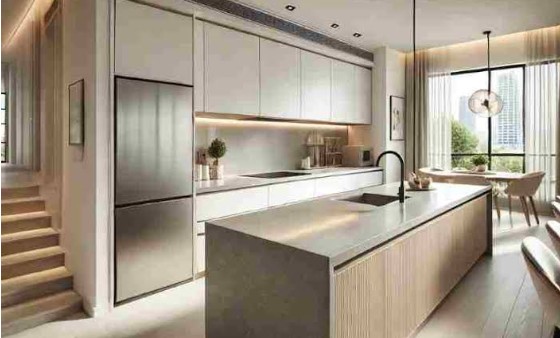
Indian kitchens are designed for intensive daily use, from preparing multiple meals to handling hot cookware, spice stains, and frequent cleaning. As a result, the material chosen for the kitchen slab stone plays an important role in determining both durability and maintenance. While granite and marble remain familiar choices, homeowners are increasingly exploring newer alternatives that offer greater consistency and long-term performance. Among them, sintered stone has emerged as a preferred option for modern kitchens, combining strength, hygiene, and contemporary design in a single surface.
What Makes a Kitchen Top Suitable for Indian Homes?
Kitchen countertops in Indian homes experience demanding conditions every day. The right material should withstand regular cooking while retaining its appearance and structural integrity over time.
Some of the most important qualities include:
- Heat resistance: The surface should tolerate hot cookware without damage.
- Scratch resistance: It should resist marks from knives, utensils, and everyday food preparation.
- Stain resistance: Common ingredients such as turmeric, oil, tea, and coffee should be easy to clean without leaving permanent stains.
- Moisture resistance: Low water absorption helps protect the surface from swelling, discolouration, and long-term deterioration.
- Hygienic surface: Non-porous materials help reduce the buildup of bacteria and simplify everyday cleaning.
- Easy maintenance: Surfaces requiring minimal upkeep remain practical for busy households.
These requirements have encouraged homeowners to look beyond traditional materials and choose kitchen surfaces that deliver both performance and visual appeal.
Why More Homeowners Are Choosing Sintered Stone
As kitchens become more central to everyday living, homeowners are looking for materials that combine durability with ease of maintenance. Sintered stone has gained popularity because it addresses many of the challenges associated with daily cooking while offering a refined, contemporary appearance.
Exceptional Heat Resistance
Hot pots, pans, and cookware are a regular part of Indian cooking. Sintered stone is manufactured under extremely high heat and pressure, allowing it to withstand high temperatures without warping or surface damage.
Superior Scratch Resistance
Kitchen countertops are used for chopping, preparing ingredients, and placing utensils throughout the day. Sintered stone offers excellent scratch resistance, helping the surface maintain its appearance despite frequent use.
Excellent Stain Resistance
Ingredients such as turmeric, chilli powder, coffee, tea, and cooking oil can leave stubborn stains on porous surfaces. The non-porous composition of sintered stone makes everyday spills easier to clean while helping preserve the countertop’s finish. Brands such as Neotra Advanced Surfaces offer marble-inspired surfaces like Olympico Bianco that capture the elegant look of natural marble with a white base while utilising advanced manufacturing to create a highly durable, non-porous material used for modern countertops, wall cladding, and tables.
Moisture and Hygiene
A non-porous surface absorbs very little moisture, making it more resistant to water damage and bacterial buildup. This supports a cleaner, more hygienic environment for everyday food preparation.
Low Maintenance
Unlike some natural stones, sintered stone does not require periodic sealing. Routine cleaning is generally sufficient to maintain both its appearance and performance over the years.
Sintered Stone vs Traditional Kitchen Slab Materials
Granite, marble, quartz, and sintered stone are among the most common materials used for kitchen tops. While each offers distinct advantages, their long-term performance varies depending on daily use, maintenance, and exposure to heat and moisture.
| Feature | Granite | Marble | Quartz | Sintered Stone |
| Scratch resistance | Excellent | Moderate | Good | Excellent |
| Heat resistance | Excellent | Good | Moderate | Excellent |
| Stain resistance | Good | Moderate | Excellent | Excellent |
| Moisture resistance | Good | Moderate | Excellent | Excellent |
| Maintenance | Moderate | High | Low | Low |
| Long-term durability | Excellent | Good | Good | Excellent |
Every material has its strengths, but sintered stone offers one of the most balanced combinations of durability, hygiene, and ease of maintenance. Its ability to withstand everyday cooking while retaining its appearance makes it an increasingly popular choice for modern Indian kitchens.
Kitchen Countertop Designs That Pair Well with Sintered Stone
The versatility of sintered stone allows it to complement a variety of kitchen countertop layouts. Its durability and large-format availability make it suitable for both compact and spacious kitchens.
Straight Countertops
Straight countertops are ideal for smaller kitchens, providing an efficient work surface without occupying additional space. Their simple layout complements both contemporary and traditional interiors.
L-Shaped Countertops
L-shaped countertops maximise corner space while creating dedicated zones for cooking and food preparation. They provide additional workspace without affecting movement within the kitchen.
Island Countertops
Kitchen islands offer extra preparation space while doubling as casual dining or entertaining areas. Sintered stone’s resistance to heat, stains, and scratches makes it well-suited for these high-use surfaces.
Peninsula Countertops
Peninsula countertops extend from the main kitchen, creating additional seating and workspace without requiring the space needed for a full island. They work particularly well in medium-sized kitchens.
Waterfall Countertops
Waterfall countertops continue the surface material down the sides of the counter, creating a seamless, contemporary appearance. This design highlights the texture and pattern of the kitchen slab stone while adding a refined architectural element to the kitchen.
Selecting the right countertop layout is only part of creating a functional kitchen. The size of the slab also influences the overall appearance, maintenance, and visual continuity of the space.
Why Large-Format Kitchen Tops Are Becoming Popular
The size of a kitchen top influences both its appearance and functionality. Large slabs are increasingly preferred because they create seamless surfaces with fewer visible joints, improving both aesthetics and everyday usability.
- Seamless appearance: Large slabs create continuous surfaces that give kitchens a clean, contemporary look.
- Fewer visible joints: Minimising joints creates a more uniform countertop while enhancing the overall design.
- Easier maintenance: Continuous surfaces are easier to wipe clean, reducing the buildup of dirt and food particles.
- Better hygiene: Fewer joints leave fewer spaces where moisture and bacteria can accumulate, making food preparation areas easier to maintain.
- Design flexibility: Large slabs can be used across islands, peninsulas, and waterfall countertops, creating a cohesive kitchen design.
Large-format kitchen tops combine practicality with contemporary aesthetics, making them well suited to modern homes where durability, hygiene, and seamless design are equally important.
Conclusion
Choosing the right kitchen slab stone is essential for creating a kitchen that remains functional and visually appealing despite years of daily use. While traditional materials continue to be widely used, sintered stone offers a more balanced combination of durability, heat resistance, stain resistance, and low maintenance. Its compatibility with a variety of kitchen countertop designs and the seamless appearance made possible by large slabs make it an increasingly preferred choice for modern Indian homes.
Write and Win: Participate in Creative writing Contest & International Essay Contest and win fabulous prizes.
About the Author