Whether you are a parent or a teacher, you care about your children’s overall development, and the ability to read fluently is seen as a must-have skill. Of course, it doesn’t happen overnight. But your expectations rise as a child moves from one class to another. If you ignore their language training in the early years of education, the chances of disappointment increase. That’s why it’s crucial to monitor their reading abilities from the beginning. For example, 1st graders are taught decoding, fluency, comprehension, print awareness, and other such components to help them hone their reading capabilities. While it’s a well-known approach, very few realize that combining reading exercises with physical activities, such as coloring, can be even more beneficial.
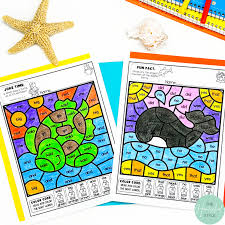
Research indicates that combining reading and coloring sessions can offer significant cognitive benefits for children by engaging their multiple brain processes related to language, focus, and creativity. The combined force of these two activities sharpens them, creatively, emotionally, and intellectually. That’s why many 1st grade worksheets that follow the science of reading principles feature coloring pages as well. When you introduce such worksheets in classroom settings, you offer them a holistic learning experience. Reading and coloring empower them in many ways.
- Stronger neural pathways
Both creative and reading activities engage multiple neural pathways involved in learning. Reading followed by coloring reinforces the concepts they just learned. Since it involves their physical and cognitive expression, their memory remains vivid. Suppose they read stories about insects or animals and then color them. It helps them better remember their anatomy and traits. Why is this effective? Their brains process both nonverbal and verbal information together. As a result, they understand better what they just learned.
- Stimulation of analytical and creative thinking
The left brain is often associated with logical, sequential, and analytical thinking, and the right brain in humans is commonly linked to spatial knowledge and creativity. However, both hemispheres work together in most tasks. When reading and coloring activities are combined, both parts of the brain are engaged and stimulated. As a result, children experience a more holistic learning style. On one side, they analyze texts; on the other, they express their understanding through art.
- Emotional development
Creative activities like coloring can serve as an emotional outlet for children. When they read a story and then color the characters, they display their understanding of that particular object or being. Whether they read stories about friendship, fear, or something else, they can use coloring to express their emotions. It is a safe way to navigate feelings, leading to sound emotional literacy and awareness.
Hence, it makes sense to introduce worksheets that tap into both reading and coloring domains. Your job as a teacher or parent will become easier, as your children respond well to the instructions and enjoy their experiences. Since many types of worksheets are available online, you can select them based on your kids’ current learning status. From phonics to digraphs, you can teach them any simple or complex language components smoothly. If those books contain coloring pages, it will be even easier to keep them engaged and reinforce their lessons.
Write and Win: Participate in Creative writing Contest & International Essay Contest and win fabulous prizes.
About the Author