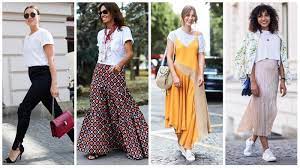
Essential Summer Fashion Pieces
Just like Instagram trends, fashion has been changing quickly too. It is now a silent contributor to one of the planet’s biggest problems. Fast fashion, emerged in the 1970’s, the business which prioritizes speed, less costs and bulk production has changed how we use clothes. Shopping for special occasions or festivals has turned into a weekly habit. Guess the result. A drastic rise in pollution. There’s lot more to this dark side.
According to Earth.org, bulk amounts of water and energy is used to produce these clothing. The fashion industry is the second largest water-consuming sector. Synthetic fibres like polyester, nylon are not easily biodegradable. This industry contributes to 10 percent of carbon emissions, uses harmful dyes that pollute the environment.
According to Oxfam.org, more than two tonnes of clothes are bought every minute in UK. The poor countries which are the least contributors to pollution are most affected by the pollution.
Sustainable fashion starts from our closet. Small shifts in mindset can contribute to meaningful changes for students and youth especially.
High cost of cheap clothes
According to Florida State University, fashion industry is the second most water consuming industry and it consumes around 79 billion cubic metres of water per year. According to United Nations Environment Programme (UNEP, 2021), fashion industry is responsible for 2-8 percent of global carbon emissions. Synthetic fibres like polyester shed microplastics that flow into oceans thus harming marine life and entering our food chain.
Workers in fast fashion supply chain, mostly women and children often face longer hours at work and poor wages. The Rana Plaza disaster in 2013 in Bangladesh, where over 1,100 garment workers died when the factory collapsed is an example.
Still we keep buying. According to Ellen MacArthur Foundation, 2017, more than 60% of all textiles produced is used for clothes production. For over the past 15 years, the production has doubled and major driver for this growth is the rising middle class population and rising per capita sales in developed economies. On the other side, clothing usage has dropped by 40%. These trends are primarily because of rise in fast fashion, less prices, new collections every year.
Why Youth must lead this movement
Present youth is the most tech-savvy and digitally connected generation. Young people can lead this movement with their mindset. Let’s see what they can do, starting with their own closets.
1.Conscious buying
Just think “Do I really need this?” before buying clothes. With this thought, we can practice sustainable fashion. We have to practice mindful consumption in this case. We can achieve this by selecting quality over quantity. This is one of the simplest ways to reduce waste.
Rather than chasing trends, we can style the old clothes in multiple ways. Styling old clothes in new ways is a smart strategy. We can also style, accessorize outfits in different ways to make our closet feel fresh. We can go for cotton instead of synthetic clothes. Garments which are made sustainably may cost more but they create less harm and are better solutions for the problem. These kind of garments are easily biodegradable compared to other materials which take hundreds of years to decompose.
2.Swaping clothes
College students can trade the clothes they don’t use in any events. This extends garment life and saves a lot of money. College campuses are a great and ideal spaces to promote sustainable fashion concept as there will be large groups of youth. These kind of opportunities reduce frequent buying of clothes and students can refresh their closets.
Green closet in India mainly focuses on sustainable fashion which reduces textile waste. This is done by doing clothing donations and raising awareness. This contributes to a circular fashion system where clothes are used for longer durations ,thus reducing the need for new production of garments ,and reducing pollution in overall.
3.Upcycling
Another interesting way to contribute to our idea is upcycling. We can turn something old into a new product using this. Students can do DIY fashion projects on this. Social media platforms like Instagram and YouTube can show tutorials that make this process more fun to viewers like showing basic sewing techniques to no-stitch hacks. An old garment can be transformed into any new garment in a trendy way.
By this, we can combine fashion with fun and sustainability. This is indeed a very creative process for the youth.
4.Support slow fashion
India is rich in handlooms. These clothes are not just beautiful, they are naturally sustainable. These clothes are made using natural dyes and fibres and low energy process. By choosing these clothes, youth can support slow fashion and support artisan livelihoods and rural communities. By this, carbon footprint is reduced and waste generated from fast fashion can be avoided.
In this process we can focus on ethics and quality. The crafts are very beautiful as they are sustainable by nature because of natural dyes.
5.Advocate and Influence
It is the responsibility of youth to educate peers using current technology about sustainable fashion. We have to host workshops, film screenings, discussions and campaigns on this issue. These can be done during college fests which can make our cause more engaging and visible .
Fashion activist Aditi Mayer creates content on educating audiences on fashion awareness. With access to social media, every student can try to bring a change regarding this situation. With the rise of usage in social media, every student can bring a change in the society. They can start their conversations in their communities, small circles to provide awareness.
Conclusion
Let’s begin our sustainable journey with our closet. We have to select which clothes we have to donate to the ones in need, which ones to upcycle and which garments we can swap with others. We are not getting limited to options rather we are finding sustainability in a more fun way. We have to use our clothes wisely. It’s not about never shopping again or wearing the same outfit repeatedly, instead we are just trying to bring a change in everyone’s mindset about mindful shopping.
By: Harshini Watada
Write and Win: Participate in Creative writing Contest & International Essay Contest and win fabulous prizes.
About the Author