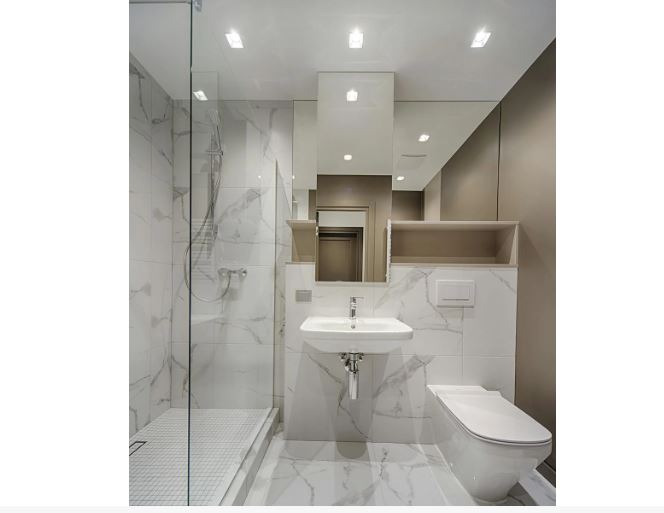
Have you ever wished you could add an extra toilet or a whole new bathroom to your home, but thought it was impossible due to tricky plumbing? Perhaps you dream of a cloakroom under the stairs, an en-suite in a spare bedroom, or even a toilet in your garden office. Often, traditional plumbing systems rely on gravity to move waste downhill to the main drainage pipes. But what if there’s no downhill path available, or if digging up floors and walls for new pipes sounds like a nightmare?
This is where the upflush macerator toilet comes in. This innovative solution offers a smart and flexible way to install a toilet almost anywhere, without needing major construction or traditional gravity drainage. It’s a game-changer for home renovations and extensions, opening up new possibilities for adding essential facilities.
So, how exactly does this clever toilet work its magic? Let’s take a closer look.
What is an upflush macerator toilet?
Unlike a standard toilet, which simply flushes waste directly into a large waste pipe that relies on gravity, an upflush macerator toilet has a special unit. This unit is usually located behind the toilet or built into the pan itself. Its main job is to macerate (which means to grind or break down) the waste, turning it into a fine slurry.
The macerating process: step-by-step
When you flush an upflush macerator toilet, here’s what happens:
Water and waste entry: Water and waste from the toilet bowl (and often from a washbasin, shower, or bidet connected to the same unit) enter the macerator chamber.
Activation: Inside the unit, a sensor detects the water level. This automatically activates a powerful motor with fast-spinning blades or a cutting impeller.
Grinding and mixing: These blades quickly and efficiently grind the solid waste and toilet paper into a fine liquid. This process is very fast, usually taking only a few seconds.
Pumping away: Once the waste is broken down into a slurry, a pump within the unit activates. Because the waste is now liquid, it can be pumped under pressure through a much smaller pipe – typically 22mm to 32mm in diameter (much smaller than standard 110mm waste pipes).
Discharge: This small pipe can run horizontally, vertically (up to several metres), or around corners to reach the nearest main drainage pipe.
Reset: Once the chamber is empty, the pump switches off, and the toilet is ready for its next use.
Why is this so smart?
The real brilliance of an upflush macerator toilet lies in its ability to overcome traditional plumbing limitations:
No gravity needed: Because the waste is pumped, you don’t need to position the toilet directly above or near a main soil stack (the large vertical pipe that carries waste away). This allows for installations in basements below the main drain, lofts above the existing pipes, or even on ground floors far from the main drainage.
Small pipework: Using small-diameter pipes means less disruption during installation. You don’t need to dig wide trenches or break open large sections of walls and floors. This makes the installation quicker, cleaner, and often much more affordable than traditional plumbing.
Flexibility in placement: Suddenly, that awkward corner, under-stair cupboard, or even a converted garage can become a functional new bathroom space. This opens up countless possibilities for adding value and convenience to your home without major structural changes.
Multiple connections: Many upflush macerator toilet units are designed to handle waste from more than just the toilet. They often have extra inlets for a washbasin, shower, or even a bidet, allowing you to create a complete bathroom in challenging locations.
What to consider before installation
While an upflush macerator toilet offers amazing flexibility, there are a few things to keep in mind:
Power supply: The unit requires an electrical supply to power the motor and pump. This must be safely installed by a qualified electrician.
Maintenance: Like any appliance, these units benefit from proper care. It’s crucial to only flush what’s designed to be flushed (human waste and toilet paper) to prevent blockages and ensure longevity. Avoid harsh chemicals.
Noise: While modern units are much quieter than older models, they do make a sound when operating. Consider placement in areas where this won’t be too disruptive.
An upflush macerator toilet provides a clever, efficient, and often less disruptive way to add essential sanitary facilities to your home. By understanding how they work, you can see why they’ve become such a popular choice for tricky renovation projects across the UK.
Write and Win: Participate in Creative writing Contest & International Essay Contest and win fabulous prizes.
About the Author