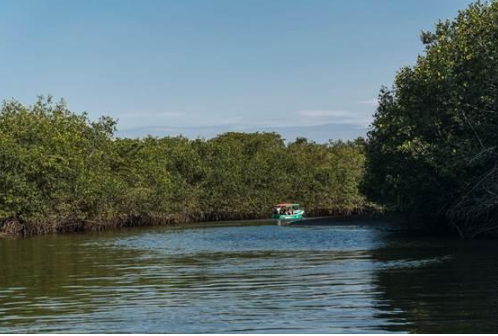
Boating through the Tumbes mangroves. ©SHUTTERSTOC
Peru’s staggering biodiversity makes it a premier destination for anyone looking to expand their life list.
Did you know that Peru is consistently ranked among the world’s top birding locations? According to eBird, of the more than 7,000 species recorded globally, a remarkable percentage calls this country home. Here, birdwatching is far more than a hobby; it is an immersive journey that rewards curiosity and patience with a profound connection to the natural world.
In Peru, birdwatching has evolved into a unique way to travel—perfect for those seeking a quiet, meaningful, and deep escape into the wild.
The beauty of Peru lies in its incredible tapestry of landscapes, allowing you to immerse yourself in completely different environments within a single journey. Each location moves to its own rhythm, offering unique sightings that captivate seasoned experts and curious newcomers alike.
In Northern Peru, the conditions for birding are world-class year-round. The Los Manglares de Tumbes National Sanctuary serves as the perfect starting point—a vibrant ecosystem teeming with endemic birds and a diverse array of both resident and migratory coastal species. In the same region, the Tumbes National Reserve unveils a lush tropical forest, home to striking species such as the Tumbes Hummingbird, the Grey-backed Hawk, and the Grey-cheeked Parakeet, as well as the White-tailed Jay and the Yellow-faced Parrot.
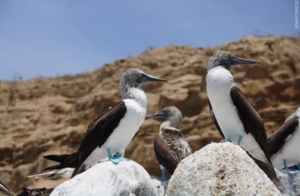
Beautiful seabirds on Máncora Beach in Piura, Peru. ©SHUTTERSTOCK
The dry forests of Cerros de Amotape National Park are nearby; they are among the best-preserved on the Pacific coast and home to species that are difficult to see elsewhere. If you travel through Piura and Tumbes, the extensive dry forests and coastal wetlands—such as Santa Julia, the San Pedro de Vice Mangroves, or the Virrilá Estuary—offer perfect settings for spotting herons, sandpipers, ibises, gulls, and many other birds.
Meanwhile, the Santa Julia Coastal Wetland Fragile Ecosystem is located in the Piura region, where 106 bird species can be observed. In the San Pedro de Vice Mangroves (located in the Sechura province), around 169 bird species have been identified. Here, you can appreciate herons, sandpipers, gulls, ibises, and other coastal birds.
In the Virrilá Estuary (also in Sechura), an ecosystem within the Pacific Desert Region, 115 bird species can be found, including 30 migratory species that use the estuary as a stopover site. Additionally, the El Angolo Game Preserve (Sullana province) has nearly 150 recorded bird species and is part of the Amotapes-Manglares Northwest Biosphere Reserve.
Keys to birdwatching
One of the keys to truly enjoying birdwatching in Peru is the accompaniment of specialized guides. They know how to interpret the sounds of the forest, identify nearly invisible movements, and read the landscape like an open book. Their presence transforms every outing into a journey that helps you discover species that would otherwise go completely unnoticed.
Another reason why this activity becomes so special is the opportunity to access remote and well-preserved ecosystems, from natural reserves to community-owned territories. This allows for the design of itineraries that combine diverse environments and increase sighting opportunities, always with a deep respect for nature.
Equipment also plays a vital role. High-quality binoculars, spotting scopes, and cameras reveal stunning details: the sheen of the plumage, the delicacy of a movement, or colors that shift with the light. Today, these tools are complemented by logging and identification apps that further enrich the experience.
Furthermore, birdwatching is best enjoyed when the logistics are well-planned. Outings typically begin early, when birds are most active, and include scheduled breaks, comfortable transfers, and accommodations that blend into their surroundings. Everything is designed so you can enjoy the landscape without sacrificing comfort.
Finally, birdwatching in Peru is a way of traveling that promotes conservation. Many experiences are linked to local projects or community initiatives that protect wildlife and ecosystems. In this way, every sighting becomes a special moment that also contributes to preserving the natural wealth of the country.
Write and Win: Participate in Creative writing Contest & International Essay Contest and win fabulous prizes.
About the Author