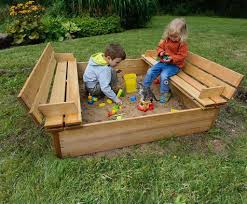
Sandpits have been a school ground mainstay for decades, and standard features in daycare centers and residential backyards. Digging, constructing, or acting out the preparation of foods, children are instinctively attracted to sand. This vintage toy medium provides much more than mere recreation – it’s a great developmental tool as well.
From building motor skills to fostering imagination and socialization, sandpits are a highly beneficial resource for children. Here’s a closer look of why sandpits for your children are an important element in any play area.
1. Fosters Creativity and Imaginative Play
Sand is perhaps the most adaptable play material of all. With the minimum equipment—or even no equipment at all, using just their fingers—children can take a loose pile of sand and turn it into mountains, roads, castles, or worlds of fantasy.
Open-ended play: Sand has no predestined purpose, so children can make anything their imaginations desire.
Role-playing: Children will go through experiences like cooking, constructing, or working on a construction site and thus acquire the world in play.
Storytelling: This type of fantasy play develops language and storytelling skill.
Sandpits encourage imagination to an extent that formal toys can only try to equal.
2. Develops Fine and Gross Motor Skills
Playing in a sandpit naturally encourages fine and gross motor skill development, critical to young children’s physical growth.
Fine motor skills: Scooping and pouring sand, patting the sand, and making lines with the fingers develop hand-eye coordination.
Gross motor skills: Spade work on sand, excavation, and walking drills in and about the pit build all-around body strength and coordination.
These movements lay the groundwork for writing, dressing, and sports.
3. Facilitates Social Interaction
Sandpits are shared space, and hence appropriate to facilitating social development and cooperative play.
Turn-taking and sharing: Children learn to wait for others’ room, equipment, or assistance.
Problem-solving: Co-operative building of buildings or games fosters working together and negotiation skills.
Patience and empathy: Playing side by side teaches children to respect others’ needs and feelings.
These experiences promote core interpersonal skills that transfer to school and other group situations.
4. Encourages Sensory Awareness
Sand play is sensory play, playing with the sense of touch and vision particularly. Sensory play is good for all children and particularly helpful for children with sensory processing issues.
Tactile feedback: Children get tactile feedback from the wet and dry sand’s texture, experiencing a range of sensations.
Visual stimulation: Observing sand change, shift, or color with water when it is wet creates visual awareness and observation of physical change.
Calming effect: The repetitive quality of digging or sifting sand is soothing to most children and therefore sandpits an ideal setting for emotional regulation.
Sensory development provides the basis for higher-order learning and day-to-day skills.
5. Teaches Basic Concepts and Problem Solving
Sandpits provide a natural learning environment for children to develop early learning ideas by way of experience.
Mathematical abilities: Pouring in and out of containers provides an introduction to measurement, volume, and numbers.
Scientific concepts: Discovering how wet sand sticks together or sand flows when dry helps in studying cause and effect, physical properties, and changes in matter.
Engineering mindset: The construction of castles and tunnels needs planning and problem-solving.
All of these activities encourage questioning and intellectual development in a fun, game-like environment.
6. Encourages Outdoor Exercise and Body Health
Sandpits are typically outside, and that too has some other health advantages.
Vitamin D exposure: Being outside offers the benefit of sun, which aids in healthy bones and a healthy immune system.
Fresh air and body movement: Sand play instills exercise and using the outdoors, good health.
Reduces screen time: Sandpit play automatically leads away from screens.
Outdoor play is critical to children’s health and helps to create active habits early on.
7. Affordable and Long-Lasting Option for Playing
Sandpits in practice are hardly any cost and can be a source of value over many years.
Low maintenance: With minimal maintenance, a sandpit can be a secure and enjoyable space for playing for many years.
Easy to change: Accessories, toys, or themes can be introduced to maintain play as fresh and thrilling as possible.
Suitable for many ages: Toddlers to early school age can all be helped with sandpit play.
In the backyard or at a day-care center, sandpits offer an inexpensive way of allowing development and enjoyment.
Purchase Sandpits for your Kids
Sandpits are not just a spot where children play; they’re powerful educational tools for development, and emotional growth. Through very basic activities such as digging, construction, and role-playing, children develop skills that foster their physical, mental, and social growth. If you want a rich play area that sparks imagination, collaboration, and experiential education, a sandpit is a wise and enduring choice.
Write and Win: Participate in Creative writing Contest & International Essay Contest and win fabulous prizes.
About the Author