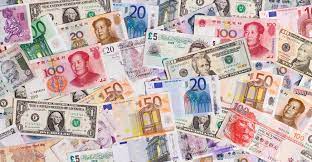
different currencies
| Every country in the world has a different currency as a manifestation of its economic sovereignty and national identity. Currency is not simply a medium of exchange that facilitates economic transactions, but also reflects a country’s economic conditions, government policies, and culture. These currency differences are crucial for each country to manage its domestic economy independently and adjust monetary policy according to the needs and challenges it faces.
The main reason why each country has a different currency is monetary sovereignty. By having its own currency, a country has the freedom to regulate the money supply through its central bank, set interest rates, and control inflation. For example, Indonesia has the Rupiah, while the United States uses the US Dollar. If all countries used the same currency, they would not have the freedom to freely implement monetary policy to stabilize their economies. Furthermore, currency differences are also related to the varying economic conditions between countries. Developed countries with stable economies typically have strong and internationally trusted currencies. Conversely, countries facing economic challenges, such as high inflation or budget deficits, tend to have weaker currencies. These currencies fluctuate in value depending on the dynamics of international money markets and other political and economic factors. In global economic relations, these different currencies are important because they drive international trade. When a country wants to purchase goods from another country, for example, Indonesia wants to purchase technology from Japan, its rupiah must first be exchanged for Japanese yen. The exchange rate determines how much local currency must be spent to obtain the desired foreign currency. The exchange rate is determined by the supply and demand of that currency in the market. If many people want to buy US dollars with rupiah, the rupiah exchange rate against the dollar will fluctuate according to market mechanisms. These countries need to maintain their exchange rates through central bank intervention to prevent sharp fluctuations that could harm their economies. The existence of different currencies also raises the importance of international financial institutions and money exchange services, such as banks and international electronic services. They facilitate the currency exchange process, ensuring smooth trade and investment between countries. Furthermore, currency exchange also plays a vital role in tourism, where tourists need to exchange their currency to shop and use services in their destination countries. The importance of money in supporting various aspects of life requires people to work hard to earn as much as possible, whether to buy food, drinks, clothing, pay for healthcare, education, and other needs. Without money, people struggle to meet their daily needs. Each country has a distinct currency, a characteristic that cannot be replaced. In short, the existence of different currencies between countries reflects economic sovereignty and national identity, as well as a crucial instrument for managing the domestic economy. The process of currency exchange through the foreign exchange market allows for smooth cross-border trade and investment, adjusting currency values to global market dynamics. This demonstrates the complexity and crucial role of currencies in connecting the interconnected world economy. By: Dynda Ajeng Pamungkas Write and Win: Participate in Creative writing Contest & International Essay Contest and win fabulous prizes. |
About the Author