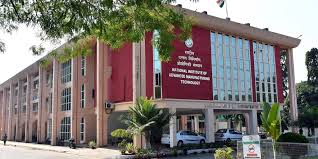
India, a nation known for its prestigious technical institutes such as the Indian Institutes of Technology (IITs) and National Institutes of Technology (NITs), is home to a lesser-known but significant institution—the National Institute of Advanced Manufacturing Technology (NIAMT), Ranchi. Established in 1966 as the National Institute of Foundry and Forge Technology (NIFFT), NIAMT has played a vital role in shaping India’s industrial growth over the past six decades. While it might not enjoy the same level of recognition as some of its more prominent counterparts, NIAMT has quietly carved its place as a leader in engineering education, particularly in the domains of manufacturing, metallurgy, and mechanical engineering.
In the mid-20th century, as India was transitioning from an agrarian economy to an industrialized one, the country faced a pressing need for engineers who were not only equipped with theoretical knowledge but also proficient in the practical application of industrial processes like metallurgy, casting, and forging. The Indian government, in collaboration with international agencies, recognized this gap and envisioned a specialized institution that could bridge this divide by producing engineers capable of handling the country’s industrial challenges. This vision culminated in the founding of NIAMT, which initially focused on producing skilled professionals in the areas of foundry and forge technology.
As years passed, NIAMT evolved and adapted to the changing demands of the industry. The transformation from NIFFT to NIAMT marked a broadening of the institution’s focus. The new name signified an expanded vision, embracing the future of manufacturing, automation, and sustainability. In a landscape where many institutions leaned toward IT and software education, NIAMT remained steadfast in its commitment to core engineering disciplines. Its emphasis on advanced manufacturing technologies, automation, and smart materials has solidified its position as a niche powerhouse in India’s industrial and manufacturing sectors.
One of the most distinctive features of NIAMT is its emphasis on hands-on, lab-based learning. The institute is equipped with state-of-the-art laboratories that provide students with the opportunity to engage directly with industrial-grade equipment and processes. Students gain hands-on experience in casting, forging, mechatronics systems, CNC machining, and metallurgical analysis. This practical exposure is one of the key elements that sets NIAMT apart from other engineering institutions. Students are not only taught theoretical concepts but are also trained to apply those concepts in real-world industrial settings.
This practical training begins from the undergraduate level, giving students early exposure to industry-standard equipment and processes. This focus on experiential learning helps students develop essential skills, such as problem-solving and critical thinking, which are crucial for their future careers. Additionally, it fosters confidence in students, preparing them for the challenges they will face in the engineering workforce.
Another significant strength of NIAMT is its collaborative and intellectually stimulating academic environment. The faculty at NIAMT is composed of seasoned educators who are not only dedicated to teaching but are also active researchers and consultants for public and private sector organizations. These faculty members mentor students through both theoretical coursework and hands-on industry projects. NIAMT’s collaborations with major industry players, such as BARC, DRDO, BHEL, SAIL, and Tata Steel, provide students with the opportunity to work on real-time industrial problems. This integration of academic learning with industrial experience ensures that the education at NIAMT is not limited to textbooks but is highly relevant to current industry practices.
Moreover, NIAMT boasts a strong and active alumni network that spans the globe. Graduates of the institution are working in prestigious research facilities in Germany, running metallurgical divisions in Japan, developing innovative manufacturing technologies in the United States, and contributing to the growth of Indian industrial giants. Despite the relatively low profile of the institute, its alumni have made significant contributions to industries worldwide. The fact that numerous companies actively recruit from NIAMT year after year is a testament to the quality of education and the value placed on its graduates by the industrial sector.
It is worth considering why an institution with such a rich heritage and significant impact on India’s industrial landscape is not more widely recognized. The answer may lie in the institute’s commitment to substance over style. Unlike other institutions that rely on aggressive marketing strategies or celebrity endorsements, NIAMT has chosen to let its work speak for itself. Its focus has always been on producing competent, industry-ready professionals rather than seeking widespread recognition. However, in an era where visibility plays a significant role in shaping public perception, this low-key approach may have inadvertently led to the institution’s limited recognition outside of its niche.
As India looks to the future, with initiatives like Make in India, Skill India, and Digital India gaining prominence, the contributions of institutions like NIAMT will become even more crucial. Advanced manufacturing is not just about machinery and technology; it is also about human ingenuity, sustainability, and skill. For India to realize its potential as a global manufacturing hub, it must invest in institutions like NIAMT that specialize in producing highly skilled professionals who can drive innovation and sustainability in the manufacturing sector. Enhancing the institute’s funding, fostering more research partnerships, and recognizing its contributions on a national level will not only benefit the institution but also strengthen India’s position in the global manufacturing landscape.
In conclusion, NIAMT Ranchi is more than just an engineering school; it is a national asset. Its contributions to the field of engineering education, particularly in manufacturing and metallurgy, have been invaluable. The institute’s commitment to producing industry-ready engineers, its hands-on approach to learning, and its integration of academic training with real-world industrial experiences have made it a hidden jewel in the realm of engineering education. As India strives to establish itself as a global manufacturing leader, institutions like NIAMT play a pivotal role in shaping the future of the nation’s workforce. It is high time that the country acknowledges the importance of such institutions and provides them with the recognition and support they deserve. By doing so, India will not only honor the legacy of NIAMT but also secure a brighter, more sustainable future for its industrial sector.
By: Hanisha Ramesh
Write and Win: Participate in Creative writing Contest & International Essay Contest and win fabulous prizes.
About the Author