There are few experiences in the world that can match the sheer intensity, beauty, and energy of Holi in India. It’s not just a festival — it’s a feeling. A rush of colour, sound, and emotion that pulls you into its embrace whether you’re ready or not. One minute, you’re standing clean and cautious on a quiet morning street, and the next, you’re drenched in powdery pink, electric blue, bright yellow — laughing, blinking through the haze, and wondering how on earth you got caught in the middle of it all.
That’s the magic of Holi. It finds you.
Often called the “Festival of Colours,” Holi marks the arrival of spring, a season of renewal, warmth, and hope after the long, dry months of winter in many parts of India. It’s celebrated across the country — and beyond — by Hindus and non-Hindus alike. While outsiders might first see it as a wild colour fight or a good photo oppurtunity (and yes, it absolutely is those things too), Holi is steeped in stories, rituals, and meanings that go far deeper than the surface.
Like many Indian festivals, Holi has its roots in mythology. The most widely told legend is that of Prahlad, a devoted follower of Lord Vishnu. His father, the demon king Hiranyakashipu, wanted everyone to worship him instead — but Prahlad refused. To punish him, the king enlisted his sister Holika, who was immune to fire, to lure Prahlad into a pyre. But as the flames rose, Holika burned while Prahlad survived — protected by his faith. Today, the night before Holi is known as Holika Dahan, and across India, people light massive bonfires to symbolize the burning away of evil, ego, and old grudges. The next morning, the real party begins.
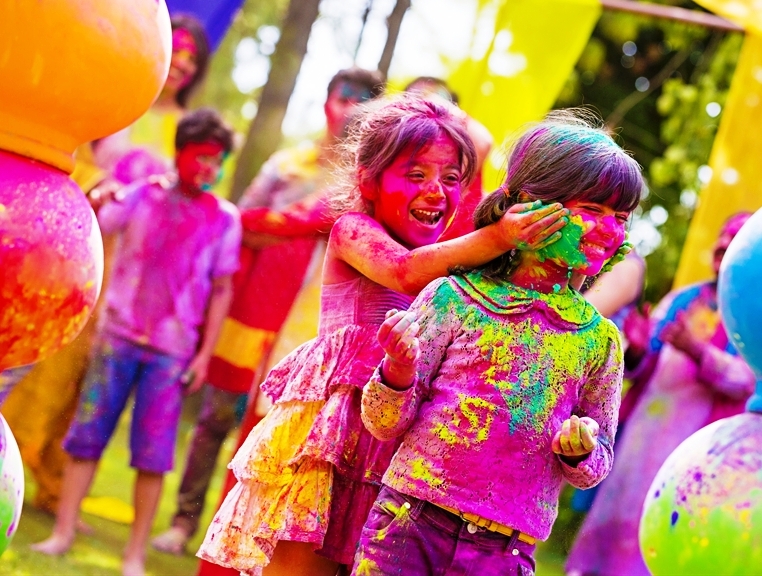
The first time you see Holi in full swing can be a bit overwhelming — in the best possible way. Streets are filled with people dancing to the beat of dhol drums, smearing gulal (colored powder) on each other’s faces, and spraying water from buckets, hoses, and water guns. Strangers become instant friends. Elders laugh like children. Shopkeepers abandon their stalls for the streets. It’s pure, joyful chaos.
And it’s not just about the colours. It’s about connection. There’s a moment — maybe after the third or fourth handful of pink powder hits you square in the chest — when you stop caring about the mess, and you just let go. You stop trying to stay clean. You stop trying to be an outsider. You just are — part of the crowd, part of the story, part of something so much bigger than yourself.
Food, of course, plays its part too. Sweet, fried gujiya stuffed with nuts and khoya (a milk-based filling) are passed around. There’s thandai to sip — a cold, creamy drink flavoured with cardamom, rose, and sometimes a touch of bhang, a cannabis-infused paste that gives everything a slightly more euphoric edge. While bhang is legal and traditional in some regions, especially in northern India, it’s not for everyone — but it is part of the experience, and many locals will proudly offer it with a wink and a smile.
Where you choose to experience Holi in India can shape your whole experience. Some travelers prefer the sacred energy of Mathura and Vrindavan, where Holi celebrations can stretch across several days and include temple rituals, religious processions, and a devotional atmosphere. These towns, closely associated with the life of Lord Krishna, bring a more spiritual and traditional flavor to Holi. If you happen to be in Barsana, you might witness (or even participate in) Lathmar Holi, a unique event where women playfully beat men with sticks — a symbolic re-enactment of Krishna’s flirtations with the village girls.
Others might head to Jaipur or Udaipur in Rajasthan for a more structured, almost royal take on the festival. Here, Holi sometimes includes folk dances, elephants decorated in paint and jewels, and organized color-throwing events that are a bit more curated for tourists. Meanwhile, in Delhi, the capital buzzes with high-energy Holi parties, including modern music festivals, rooftop gatherings, and color runs. There’s something for everyone — whether you want the authentic, the spiritual, the playful, or the Instagram-worthy.
But no matter where you celebrate Holi, one thing remains the same: you need to come prepared. This isn’t the kind of festival you attend without a plan. Old clothes — preferably white — are your best bet, as they’ll turn into a canvas of color by the end of the day. Many travelers (and locals) oil their skin and hair before heading out, which helps the colors wash off more easily. Sunglasses are a must, both for style and eye protection. And it’s best to leave anything valuable at home — Holi and electronics do not mix.
That said, Holi is incredibly welcoming to visitors, especially those who come with respect and curiosity. There’s a generosity to the celebrations — people will invite you into their homes, offer you sweets, gently smear your face with color, and call you “friend” even if you just met. It’s not just about what you see or do — it’s about what you feel. For many travelers, Holi becomes a moment of pure human connection — where the usual barriers of language, culture, and background fade into a cloud of blue, green, pink, and gold.
Of course, not every moment of Holi is perfect. Some crowds can get rowdy, and there are stories of women travelers facing unwanted attention. These incidents are not the norm, but they are a reminder to choose where and with whom you celebrate wisely. Many cities now offer “safe Holi zones” or organized events specifically designed for tourists and families. These are good options if you’re not comfortable joining the more spontaneous street celebrations.
Still, for all its unpredictability, Holi remains one of the most unforgettable experiences you can have in India. It’s loud, messy, and completely unfiltered — a celebration of life, of letting go, and of starting fresh. In a country as complex and layered as India, Holi is a rare moment when everything becomes simple. Just joy, color, and the shared chaos of being alive.
For anyone planning a festival-themed journey through India, Holi deserves a top spot on the itinerary. It’s not just a box to tick or a photo to snap — it’s a chance to dive headfirst into the culture, to become part of a story that’s been told for centuries, and to leave, perhaps, just a little more colourful than when you arrived.
By: Pradyun Reddy Chintala
Write and Win: Participate in Creative writing Contest & International Essay Contest and win fabulous prizes.
About the Author