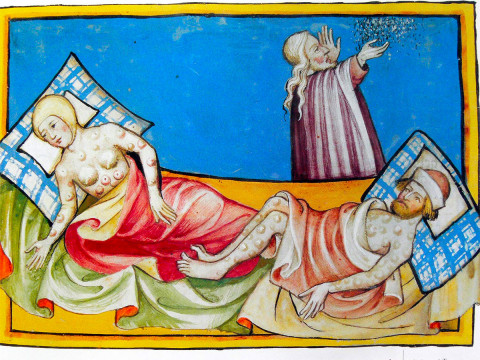
It’s good and bad to know about the exact date of your death.
I know when is the day I am going to die.
It is simple.
The day I die is the day the world will end for me but not for others. Life will go on, some will be affected by my loss, some would not.
Will that make a difference to me? Should it make a difference to me? What difference will it be to me?
Mortality is the reality
While mortality is universal, its timing remains unknown, allowing individuals to plan, hope, and imagine open-ended futures. This essay explores a thought experiment in which every person knows the exact date of their death from birth. Such knowledge could profoundly reshape human behaviour, influencing decision-making, emotional well-being, and social structures. On the one hand, knowing the precise endpoint of life may encourage purposeful living, careful planning, and a deeper appreciation of time. On the other hand, it could lead to psychological distress, fatalism, and ethical challenges related to privacy and inequality. By examining both the benefits and drawbacks of knowing the exact date of one’s death, this essay evaluates whether such certainty would ultimately enhance or undermine the human experience.
Death is the end of the world- literally
When one soul dies, it is the end of it. End of the way that soul has seen this world and the realm of this life. “Most of the time, we go through our days unaware, not thinking of our mortality,” says Chris Feudtner, a paediatrician and ethicist at the Children’s Hospital of Philadelphia and the University of Pennsylvania. “We cope by focusing on the things more directly in front of us.” (bbc.com)
Fear of death is universal
To be honest if you think about it, humans do not fear death as such. They fear what they have been taught about death. About karma, about good and bad, about the pain, about it not being easy. This fear is always present but hidden in plain sight. Religion and spirituality offer hope that this fear is baseless. Something happens after death – this is the primary message – and this something is good, or at least it is better than nothing. (medium.com) And thus, the stigma deepens around the taboo of death.
What is the first thing that comes to mind, if someone says you are going to die tomorrow?
The uncertain fact that maybe you have not lived your life enough. But why?
It is a standard that death should come only if you have lived a long and fulfilling life, and if not, it should not come at all.
Benefits of knowing our D- Day
· Prepare more
Knowing how we die helps the overachievers amongst us the most. Such people are able to now plan their lives, how they can live and how much risk they can intake upon their life to do all the things they want to or dream of doing (but hold themselves back in the fear of harm or death).
· Do whatever we wish
Suddenly, we can live life without the worry of death. Now that the ‘fear control’ factor is out of the way we are way more free with ourselves, our behaviour and our wishes.
· Knowing the cause helps us avoid it to get risk
If I am going to die by falling from a rooftop (hopefully not), then I will avoid tall buildings, terraces and such areas where I might potentially fall off and invite impending doom upon myself.
· Be more happy
It is a simple logic. If you are not going to die anytime soon, what are you even worried for?
· Death reflection
Researchers encourage people to think about death; generally, or in an abstract way. This motivates people to think about causes, consequences and effects of what their death, their absence will mean… to others and to themselves. People thus become more willing and are more open to reflect roles of positivity and negativity in their lives. (bbc.com)
· Appreciate life better
Letting go of trivial everyday things that are not going to matter in the long run is an essential skill. But how many of us are actually able to master it? Barely enough. And maybe just knowing when we are going to leave life will enlighten the spark of gratitude and humbleness in us.
Drawbacks of knowing our D- Day
· Misery
For the people whose death is near… too soon… life can be miserable.
· Spreading chaos
If people learn how and when they are going to die, the society would likely become more violent, more racist, more harmful and xenophobic rendering upheavals and chaos everywhere around.
Death is in a way a safety precaution; not for us, but for the others around us from us. We do not do dangerous stuff solely because we are scared of death. If that fear is gone, human behaviour will come down to its erratic irrationality and forget morals and values.
· Avoidance may or may not steal ultimate joy
Remember I said, what if my death is written from a rooftop fall? But just imagine what if I am destined to become something great in the field of aviation sports like gliding or soaring?
The thing is I will never even attempt to climb more than 3 floors of a building much less even think about doing circus in the air solely because I know how I am going to die (which is by falling from a height). Hence, we will end up avoiding the thing that might us death for sure, but might even end up letting go of something that might bring us one of the greatest experiences of our life for us.
· May not like the manner and time- unhappiness
Not everyone is going to be satisfied with the time and manner of their demise. What is its too soon? Or not to great enough? (People can be picky you know!)
· Looming death is a motivation.
Once we know when our death is and how it is going to happen, the motivation is lost. Some way or the other its this fact that ‘we are going to die one day’, that motivates us to live life. Eat good food, exercise daily, pray, do good things, and do something so good that leaves a mark on this world; so that people remember our life even after our death.
· Fatalism
Maybe knowing about the day we die is not so much of a good thing at all. Weaker ones may not be able to take it all, a sense of foreboding… hopelessness, anxiety. Not all of us are ready to die at all.
Death is the one that always chases us. The relentless pursuer who never gives up. (If people of this generation did even 1% of the effort into us the way death does, things would be different). And therefore, knowing when is the day we die and how is it that we die is a very interesting concept and idea, but at the same time complex in its many aspects like psychological, philosophical and ethical. In real life, it is the uncertainty, the fact that ‘we do not know’ is what makes life more interesting, more mysterious and worth living more. I do not think that that joy, fun, happiness and fulfilment can be found in the idea of knowing our D- Day. Living each day and everyday like it is the last has its own profound joy and the fire of adventure that makes each life unique and each soul vibrant. Therefore, it is important that we make most of our time, of value and moral regardless of what tomorrow is going to bring.
Concept of ‘Afterlife’
Life after death. We have heard about it countless times, some even believe in it profoundly… good karma, bad karma. Seven lives. Heaven. Hell. And what not…
But what is the proof? What does actually happen after we are gone? Not here… not to the world… but to ourselves. If we die… is that it? The end? Then what is the purpose of life? You learn everything, accumulate life experiences, get to know people, do things.. do adventurous things, risky things, happy moments, sad moments… all part of your life… where does it all go? What is the point of doing it all if afterwards there exists nothing at all? Is that why we are living? A profound existence… all for ‘nothing’? What a waste!!
In conclusion, uncertainty plays a huge role in shaping one’s decisions and pathway of life. While knowledge about the manner and timing of death could promote intentional living, improved planning, and a heightened awareness of time’s value, it also carries serious psychological, social, and ethical risks. The burden of certainty may foster anxiety, fatalism, and new forms of inequality, ultimately restricting rather than enriching personal freedom. This balance suggests that uncertainty about death, though often uncomfortable, may be essential to motivation, resilience, and hope. By examining both the benefits and drawbacks of this hypothetical scenario, it becomes evident that ignorance of life’s endpoint may serve not as a weakness, but as a fundamental condition for meaningful human existence.
By:
About the Author