Textile manufacturing runs on steam. Dyeing, finishing, drying, pressing and general process heating all depend on it, and in most mills the boiler house is one of the largest single items on the energy bill.
That makes fuel choice a live question for the sector, and biomass comes up regularly. Whether it suits a particular mill depends less on the technology than on what is happening around it.
Where Textile Mills Use Steam
Dyeing is usually the heaviest consumer. Dye baths need heating and holding at temperature, and the demand is rarely constant across a shift.
Finishing processes, including setting and various chemical treatments, add further demand. Drying, whether in stenters or other equipment, is a substantial load in most operations.
Beyond production, steam is used for pressing, general heating and cleaning. The result is a demand profile with peaks, troughs and considerable variation depending on what is running.
Understanding that profile matters more in textiles than in industries with a steady flat load, and it should be established before any equipment is specified.
Why Biomass Comes Up in Textiles
Textile mills are frequently located in regions where biomass is available and where gas infrastructure is limited or costly.
Where suitable fuel can be obtained reliably and locally, a wood fired steam boiler offers an alternative to buying in oil or LPG. In some markets there are also regulatory or incentive frameworks favoring renewable fuel, which affect the arithmetic.
The qualification is that biomass makes sense when the fuel supply is genuinely reliable. Unlike a sawmill burning its own residue, a textile mill is a fuel buyer, competing for supply with other users and exposed to price movement and seasonal availability.
That is not an argument against biomass. It is an argument for securing the supply position before committing capital.
Handling a Variable Load
The variability of textile steam demand is the technical challenge worth planning for.
Solid fuel systems respond more slowly to changing demand than gas systems do. A grate carrying a burning fuel bed cannot be turned down instantly, which makes rapid load swings harder to follow.
There are established ways to manage this. Steam accumulators can absorb peaks and release them as needed. Multiple smaller units allow capacity to be brought in and out. Scheduling production to smooth the demand profile helps where it is practical.
What does not work well is sizing a single large solid fuel boiler to the peak and expecting it to sit efficiently at low load for much of the day. That arrangement produces exactly the cycling and inefficiency it was meant to avoid.
Steam Quality
Textile processes are sensitive to steam quality in ways that some other applications are not.
Wet steam carries water into the process, which affects dyeing consistency and finishing results. Carryover of boiler water treatment chemicals into the process is a concern where steam contacts material directly.
This means separation, trapping and condensate management deserve attention, and water treatment should be specified with the process in mind rather than only the boiler. These considerations apply regardless of fuel, but they should not be lost in a discussion focused on fuel switching.
Space and Fuel Storage
Biomass is bulky, and this is often the constraint that decides matters in an established mill.
A site converting from oil or gas will need fuel storage, delivery access, a feed arrangement and ash handling, none of which the previous system required. Covered storage is generally needed to control moisture, since wet fuel delivers less useful heat.
Older mills in built up areas are frequently short of exactly this kind of space. It is worth assessing the fuel yard requirement early, because a project that works technically can still fail on site layout.
Ash, Labor and Ongoing Work
Solid fuel systems require more routine attention than gas. Ash removal, grate work, fuel handling and more frequent cleaning of heat transfer surfaces all take staff time.
This is manageable and entirely normal, but it should be costed rather than assumed away. In a comparison against gas or oil, labor is a genuine part of the difference.
Local rules on ash disposal should also be checked before commissioning rather than after.
Yongxing Boiler and Textile Applications
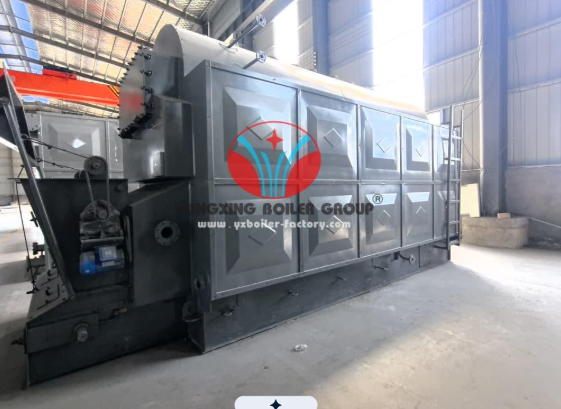
Yongxing Boiler manufactures industrial boiler systems for biomass and solid fuel applications.
For a textile project, the useful discussion with any supplier starts with the demand profile rather than a single capacity figure. Peak demand, base load, how quickly load changes and how often, working pressure and steam quality requirements all shape which arrangement is appropriate.
Fuel specification matters equally. Which biomass the design is built around, the moisture range it expects, how fuel is fed and how ash is handled will determine what the system delivers on the fuel actually available locally.
Installation requirements, safety standards, technical support and expected maintenance belong in the same conversation. A system suited to a steady industrial load may perform poorly against a variable textile one.
Conclusion
Biomass can be a reasonable fuel for textile production, particularly where wood is available locally and gas is not.
It is not a straightforward substitution. The load in a textile mill varies, solid fuel systems follow changing load less readily than gas, and the space and labor requirements are meaningfully different.
A mill considering the change should start with two pieces of evidence: a measured steam demand profile across a normal production week, and a realistic assessment of what fuel can be secured, at what quality, over the life of the plant. Those two answers will indicate whether the project is worth developing further.
Write and Win: Participate in Creative writing Contest & International Essay Contest and win fabulous prizes.
About the Author