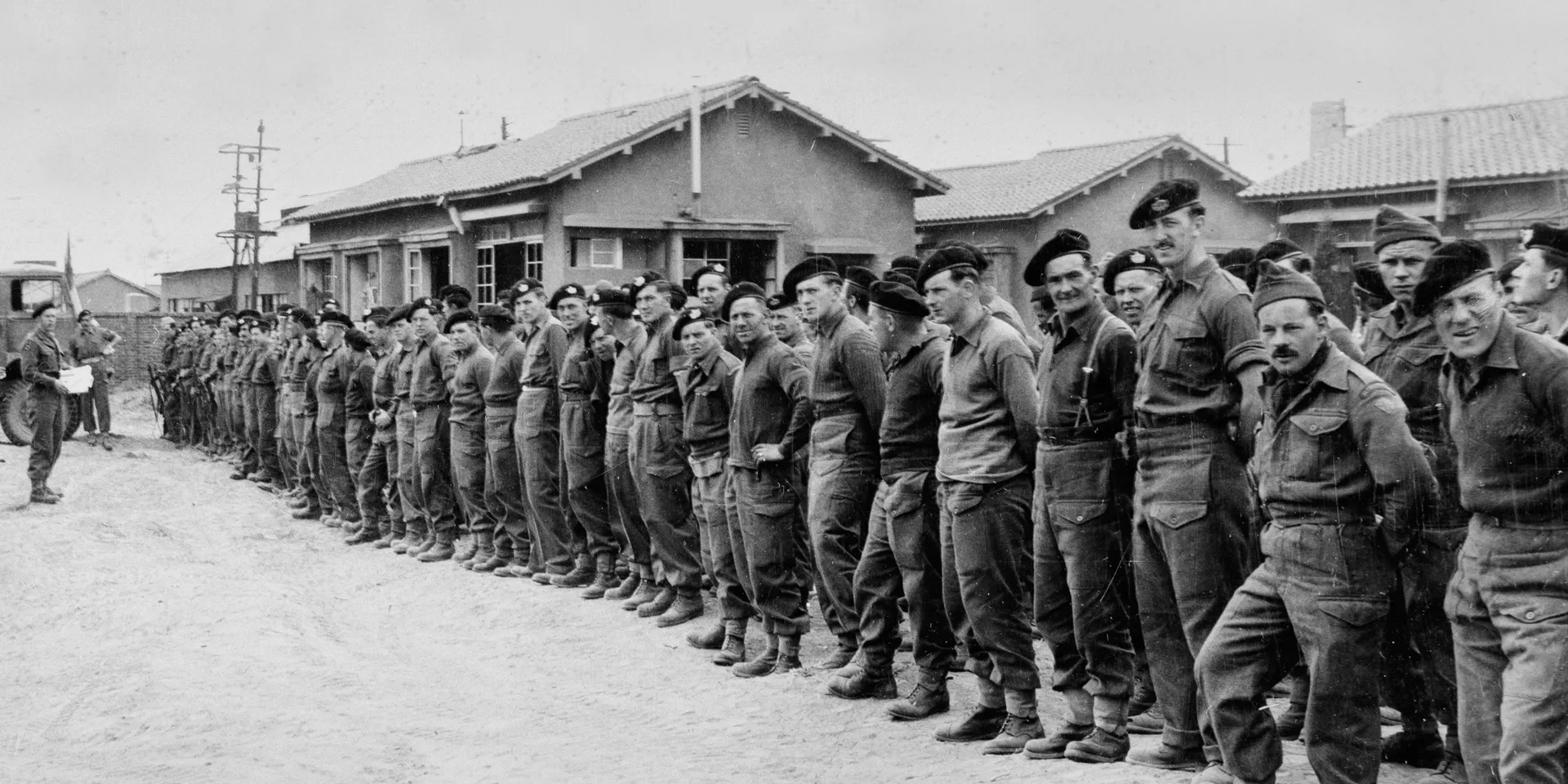
History shows that the consequences of war are extremely significant, often marking the transition from one historical era to another. The destruction caused by war creates a strong need for rebuilding and for establishing new political systems that can restore stability and economic prosperity. However, war does not completely erase the past. War between countries or within a nation have often changed the fate of a nation including national borders, affected economic growth, and deeply impacted the lives of millions of people. Similary, the Korean War (1950-1953) had a huge impact on the fate of both North Korea and South Korea. Although the war ended without a clear victory, it absolutely changed the future of the Korean Peninsula. This rivalry was intensified by the broader Cold War confrontation between the Soviet Union and the United States. Consequently, the reconstruction of both states was shaped by internal political conditions as well as external geopolitical pressures.
The Korean War lasted from 1950 to 1953 and was a major conflict of the Cold War, fought between North Korea backed by the Soviet Union and China and South Korea and they are supported by the United States and United Nations forces. The conflict raised significant military, political, and ideological issues for the United States, United Kingdom, the United Nations, and numerous nations around the world. On 25 June 1950, military forces from North Korea, officially the Democratic People’s Republic of Korea, launched an invasion of South Korea, also known as the Republic of Korea by crossing the 38th Parallel, the boundary that had divided the two states since 1945. Many Western countries were shocked when the Korean War began in June 1950.
However, tensions had been growing on the Korean Peninsula for many years. Early twentieth-century Korean leaders demanded recognition and independence, but their efforts achieved little success. In 1910, Korea was occupied by the Japan and remained under Japanese rule until Japan surrendered in August 1945 at the end of World War II. This period of colonial rule had a profound and complex impact on Korean society, including the involvement of Koreans in Japans wartime military.
In August 1945, after the end of World War II, Korea was divided into two zones of occupation. United States forces controlled the south and Soviet Union forces occupied the north. The two sides agreed to divide the peninsula by the 38th Parallel. Under the supervision of these two ruling parties, two different political systems appeared. In North Korea, a communist government was established under the leadership of Kim Il-sung. In South Korea and democratic government was formed under President Syngman Rhee.
During this period, political repression occurred in both regions and tensions between the two governments increased. Although the occupying forces withdrew in 1948, hostility between the two sides continued to grow. These tensions eventually led to the invasion of South Korea by North Korean forces on 25 June 1950, marking the beginning of the Korean War. In South Korea, this conflict is still commonly referred to as the 625 War, reflecting the date it began.
In response to the northern invasion, the United States entered the war to support South Korea. The South Korean military was quickly overwhelmed by the stronger northern forces and the United States. Secretary of State Dean Acheson decided to commit more American troops to the conflict, a decision supported by President Harry S. Truman and approved by the United Nations. Despite the large number of American troops deployed, the northern army continued its advance during the summer of 1950. As a result, South Korean and U.S. forces were forced to retreat to Busan, the southeastern port city at the edge of the Korean Peninsula.
By early August, the northern advance had been stopped and the front line became conditionally stable with no major breakthroughs from either side until the end of the month. However, the situation changed in mid-September when Douglas MacArthur led United Nations Command forces in a successful amphibious landing at Incheon. This operation enabled UN forces to recapture Seoul from the Korean People’s Army, causing Kim Il-sung’s initial plan to quickly win the war within a month to collapse.
With increasing momentum, the U.S.-led United Nations Command advanced beyond the 38th parallel north into northern territory. In late October, China involved in the war to support the Democratic People’s Republic of Korea mainly to defend its borders from the UN advance. The decision had been made earlier by Mao Zedong, partly because Korean forces had previously helped China during the Second Sino-Japanese War and the Chinese Civil War. Intense fighting between Chinese–North Korean forces and the UN coalition continued until late spring 1951 and the battle lines stabilized near the area that later became the Korean Demilitarized Zone.
In July 1951, truce negotiations began among the four main participants in the war: the Democratic People’s Republic of Korea, the People’s Republic of China, the United Nations Command, and the South Korea. However, the conflict continued in the form of trench warfare therefore negotiations lasted for another two years . Finally, on July 27, 1953, an armistice agreement was signed by three of the parties—the DPRK, PRC, and UNC. Syngman Rhee, the leader of South Korea, refused to sign the agreement because he rejected the permanent division of the Korean Peninsula. Despite this, the armistice came into effect, ending hostilities and creating the Korean Demilitarized Zone, a buffer zone approximately 2.5 miles wide. As the agreement was only a cease-fire rather than a peace treaty and the two Koreas technically remain at war.
Since 2000, relations between North Korea and South Korea have shown occasional signs of improvement. A significant step occurred in 2000 when the two sides held the first inter-Korean summit. However, tensions soon resurfaced as North Korea conducted missile tests in 2006 and 2009 and continued pursuing nuclear development. These actions raised serious international concerns and led the United Nations to impose several sanctions on North Korea. In response to the growing threat, the Six-Party Talks were organized to seek diplomatic solutions involving six key countries: North Korea, South Korea, the United States, Russia, China, and Japan.
The devastating fratricidal conflict left Korea with deep and lasting scars. Historians estimate that nearly three million Koreans died during the Korean War and at least half of the victims were civilians. In addition to the widespread destruction caused by heavy bombings across the peninsula, the immense loss of life created profound psychological trauma. The war was particularly tragic because it was essentially a conflict in which Koreans fought and killed fellow Koreans. In the years following the war, hostility and distrust between North Korea and South Korea continued to intensify with frequent incidents such as border clashes, espionage activities, and kidnappings.
After the Korean War, the Republic of Korea and Democratic People’s Republic of Korea continued to compete for international recognition. The South adopted a strategy reminiscent of West Germany’s Hallstein Doctrine by emphasizing its growing economic strength and close alliance with the United States with is an evidence for the legitimate Korean state. Meanwhile, North Korea emphasized its commitment to national sovereignty and independence. During this period, neither state could truly be considered democratic or politically pluralistic.
From the South Pacific island nations to the Caribbean, both Republic of Korea and Democratic People’s Republic of Korea dispatched diplomats worldwide in a competitive effort to gain international recognition. In some instances, representatives from the two Koreas visited the same head of state on the same day. Seoul adopted a policy of refusing diplomatic relations with countries that formally recognized the North and Pyongyang reciprocated. Both governments claimed to be the sole legitimate authority on the Korean Peninsula and did not formally recognize one another.
In the decades following the war, the two Korean states developed along totally different political and economic paths. South Korea adopted a democratic government and a capitalist economy and North Korea remained a highly centralized communist state with strong political isolation. In the early postwar years, North Korea’s economy was stronger and more developed than that of the South until around 1960. However, beginning in the 1960s, South Korea experienced rapid industrialization over several decades and eventually becoming a major competitor in the global economy. Although North Korea continues to follow the principle of self-reliance based on the Juche ideology, its economy has struggled and now depends heavily on foreign aid and other means to maintain its large military system.But the considerable uncertainty continues to the surrounding of Korean Peninsula. North Korea’s rapid nuclear development and aggressive posturing pose a significant security threat to Northeast Asia. North Korean state media has cited the executions of Iraqi leader Saddam Hussein and Libyan leader Muammar Gaddafi as evidence that nuclear weapons are essential for regime survival.
Pyongyang frames its nuclear program as a response to perceived “U.S. war provocations” and regularly tests ballistic missiles and significantly enhancing its asymmetric military capabilities. North Korean hackers are also known for their technical expertise, generating revenue to support the nuclear weapons program. Analysts estimate that North Korea possesses between forty and fifty nuclear warheads with projections of up to 200 by 2027 and potentially capable of striking the U.S. mainland.
While South Korea maintains more technologically advanced military equipment, North Korea relies on outdated Soviet-era tanks and artillery. Nevertheless, it fields one of the world’s largest standing armies and allocates 20–30% of its GDP to military expenditure. The regime’s strategic partnerships with China and Russia mean that any potential conflict on the peninsula could escalate into a broader international confrontation.
The ongoing division of the Korean Peninsula represents one of the most enduring legacies of the Cold War. A highly centralized and authoritarian regime in the North, characterized by leader cults and totalitarian governance, exists alongside a dynamic and economically thriving South. The Korean conflict is both a historical relic and a contemporary geopolitical hotspot with the potential to escalate rapidly into a nuclear confrontation.
Both North and South Korean societies continue to operate under a pervasive siege mentality, deeply embedded in the political psychology of their respective leaderships. The persistent division of the peninsula has reinforced this posture, which shows little sign of abating in the foreseeable future.
The legacy of the Korean War can still be seen in everyday life. The war created a large number of orphans and separated countless families across North Korea and South Korea. In South Korea, the war also led to the long-term presence of United States military bases and the establishment of mandatory military conscription for male citizens. Another significant development has been the increasing number of North Korean defectors seeking refuge in the South. These examples represent only some of the lasting consequences of the war. Overall, the memory and impact of the conflict remain deeply embedded in the consciousness of people on both sides of the Korean Peninsula.
By: Daw Nan May Pwint Phu
Write and Win: Participate in Creative writing Contest & International Essay Contest and win fabulous prizes.
About the Author