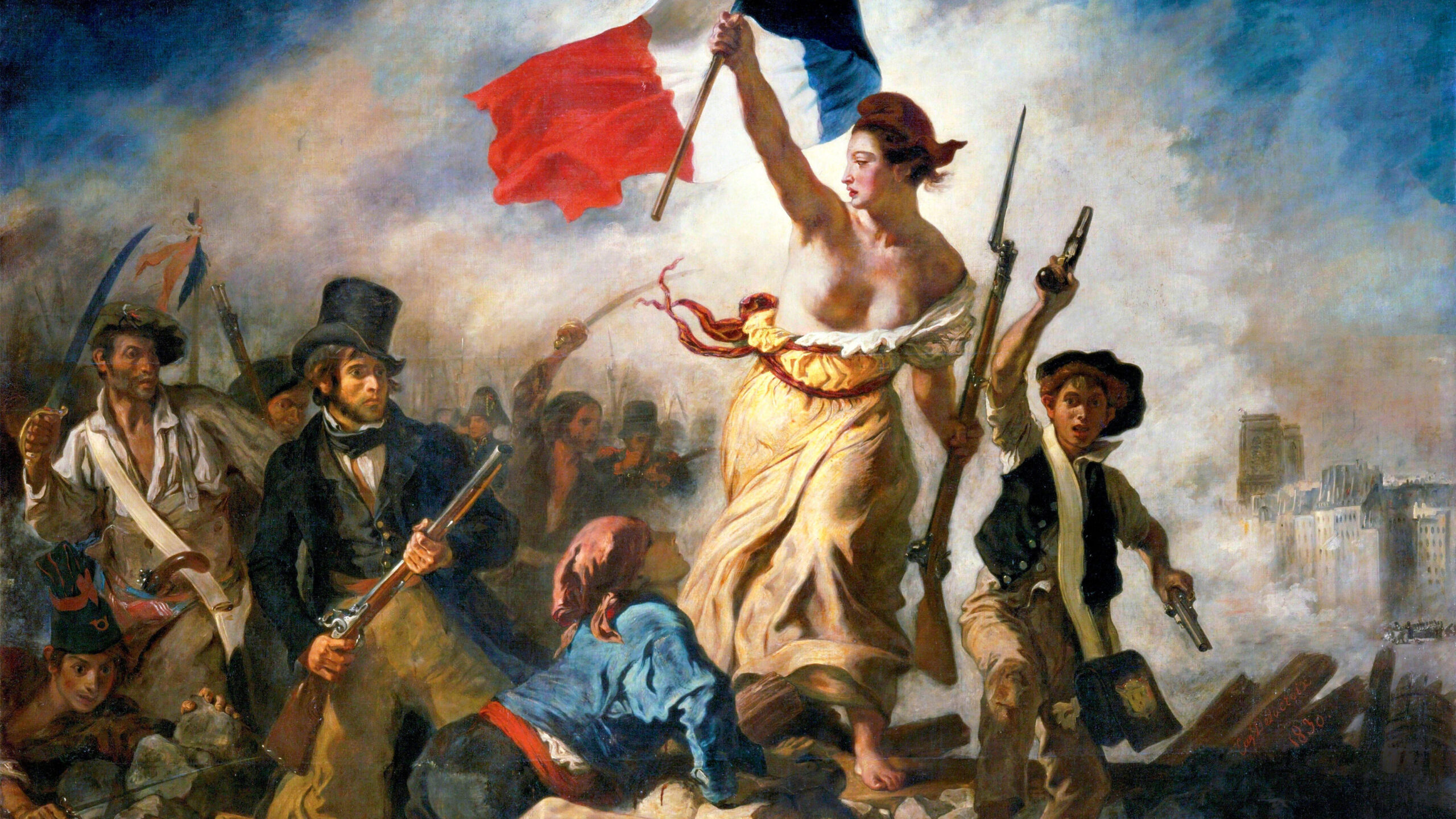
The wheels of history often turn without prior warning. The saga of heroism written by the students and general public of Bangladesh in July 2024 was not merely a change of regime; it was a struggle to reclaim a nation’s identity. Following the Language Movement of 1952 and the Liberation War of 1971, the ‘July Revolution’ of 2024 has been marked as the third greatest milestone in the history of Bangladesh. By ending a decade-long autocratic rule, this uprising showed the world that bullets and tear gas are inconsequential before the indomitable courage of the younger generation. It also demonstrated how a student-led quota reform movement transformed into a successful revolution, reshaping the nation’s economic and international future.
Context of the Movement: From Deprivation to Defiance
On June 5, 2024, the High Court’s decision to reinstate the quota system in government jobs ignited a fire of resentment among students. Meritocratic students viewed the reinstatement of a system abolished in 2018 as a direct blow to their future.
Anti-Discrimination Student Movement: Starting July 1, students began peaceful sit-in programs at Dhaka University and other public universities nationwide. Their slogan was: “Spread the news across Bengal, bury the quota system.”
Explosion of Emotion: The turning point occurred on July 14, when the then-Prime Minister Sheikh Hasina used the derogatory term ‘Razakar’ (collaborator) to describe the protesting students. In protest, thousands of students at Dhaka University chanted that night: “Who are you? Who am I? Razakar! Razakar!” (which later evolved into the popular chant: “I asked for rights, but became a Razakar”).
The Bloodshed of July and the Epic of Abu Sayed
July 16 was the turning point of this revolution. Abu Sayed was killed by police fire at Begum Rokeya University in Rangpur. The image of that young man standing with arms outstretched, baring his chest to the bullets, spread across the world instantly. The nature of the movement shifted as the streets were stained with Abu Sayed’s blood. General students were no longer alone; they were joined by parents, rickshaw pullers, and the working class. When the government issued “shoot on sight” orders and imposed a nationwide internet shutdown, the situation spiraled out of control. From July 19 to August 5, Bangladesh turned into a besieged inferno. At the cost of hundreds of lives, the fear in the hearts of the people evaporated like camphor.
Economic Impact: Reconstruction from the Rubble
The July Revolution exposed the dark side of the Bangladeshi economy while simultaneously offering a glimmer of hope.
Audit of Losses: Due to continuous curfews and internet blackouts, the Ready-Made Garment (RMG) and e-commerce sectors suffered irreparable damage. According to preliminary World Bank estimates, the direct and indirect economic loss during these weeks exceeded $10 billion USD.
Banking Sector Reforms: The interim government has begun healing the wounds inflicted by groups like the S. Alam Group, who looted thousands of crores from banks over the last 15 years. Under the leadership of the new Central Bank Governor, Ahsan H. Mansur, strict measures are being taken to recover defaulted loans and prevent money laundering.
Remittance Warriors: Money sent by expatriates was a major driving force of this revolution. Before the fall of the government, they observed a “Remittance Shutdown,” straining the government’s foreign reserves. Now, those same expatriates are stabilizing the reserves by sending record amounts through legal channels.
International Reaction and Geo-politics
This shift in Bangladesh has also impacted the balance of global power
The Role of the UN: The UN Human Rights Council (UNHRC) sent a high-level fact-finding mission to investigate the atrocities of July-August. This is a first in Bangladesh’s history, indicating how seriously the global community views this revolution.
Western Support: The US, UK, and European Union have expressed full support for the interim government led by Dr. Muhammad Yunus. They see this change as an opportunity for democratic restoration in Bangladesh.
Regional Challenges: India faces a new reality regarding existing bilateral relations. On the other hand, China and Russia are emphasizing internal stability while strategically monitoring the situation.
Future Reconstruction: 10 Points for State Repair
Revolution is not just a change in power; it is the restructuring of the state. The current youth and the interim government are focusing on several fundamental reforms:
Independence of the Judiciary: Complete separation of the judiciary from the executive branch.
Election Commission Reform: Creating an environment for free and fair elections.
Police Force Modernization: Transforming the police from a partisan tool into a service-oriented force.
Anti-Corruption: Strengthening the Anti-Corruption Commission (ACC) to bring powerful offenders to justice.
Merit-Based Administration: Ensuring recruitment based on merit through logical quota reforms.
Cultural Awakening: Revolution through Graffiti and Slogans
The July uprising was not just a battle on the streets; it was a cultural revolution. When the internet was cut and media was censored, the walls of Dhaka began to speak.
Wall Art and Graffiti: Young artists turned the nation’s walls into canvases depicting Abu Sayed’s bravery, Mugdho’s distribution of water, and demands for the fall of autocracy. Phrases like “No Alternative”, “Who is the alternative? Me, You, Us”, and “Does anyone need water?” became bullets of resistance.
Songs of Revolution: From rap to folk music—the tone of rebellion was everywhere. Songs like “Is the country your father’s?” or “Abu Sayed has not died” spread like wildfire on social media, fueling courage. It proved that Gen Z is not just tech-dependent; they can shake a state through creativity.
The Conflict between Social Media and Mainstream Media
The use of information technology in this revolution was unprecedented. While the government promoted a one-sided narrative through state television (BTV) and certain private channels, citizens turned to “Citizen Journalism.”
The Facebook and TikTok Revolution: Every student provided live updates from the streets via smartphones. When videos of excessive force by law enforcement went viral, the general public could no longer stay home.
Internet Shutdown and Blackout: The “Digital Blackout” backfired. Without information, people became more anxious and enraged, pouring onto the streets. International media used satellite imagery to broadcast the severity of the movement, isolating the government globally.
Gen Z: Leadership and the Path Forward
Sociologists worldwide have dubbed this the “Gen Z Revolution.” These youths, born between the mid-1990s and early 2010s, proved they are not against politics, but against “dirty politics.”
Fearless Leadership: The intelligence and strategic positioning of the coordinators of the Anti-Discrimination Student Movement surprised political analysts. They understood the pulse of the people without being puppets of established political parties.
Civic Responsibility: After August 5, when there was no functional government or police, these youths managed traffic, cleaned the streets, and guarded the places of worship of minorities. This proved that Bangladesh is safe in the hands of this generation.
The Anatomy of an Autocracy: Why the Dam Burst
To understand the magnitude of the July Revolution, one must analyze the pressure cooker environment that preceded it. For fifteen years, the political landscape was characterized by a “culture of fear.” Dissent was met with enforced disappearances, and the Digital Security Act (later the Cyber Security Act) functioned as a muzzle on free speech.
The revolution wasn’t just about a quota; it was the culmination of suppressed grievances. The “miracle” began when the fear of death was superseded by the collective desire for dignity. In political science, this is often referred to as the “tipping point.” When the government labeled students as “Razakars,” they inadvertently broke the social contract. By weaponizing a sensitive historical term, the state lost its moral authority over the youth, who chose to redefine their own history rather than be shackled by the trauma of 1971 used as a political tool.
The “Bangladesh Miracle”: Governance Without a State
Perhaps the most miraculous phase of the revolution occurred between August 5th and August 8th, 2024. Following the resignation and flight of the former Prime Minister, the country faced a total administrative collapse. The police force, fearing public retribution for their role in the crackdown, vacated their posts.
In any other nation, this would have led to absolute anarchy and widespread looting. However, Bangladesh witnessed a “civil miracle”:
The Student Police: Armed only with plastic whistles and neon vests, students as young as fifteen took over traffic management in Dhaka—a city of 20 million. They managed the chaotic intersections more efficiently than the motorized signals ever had.
Cleaning the Canvas: Within 48 hours, the debris of the revolution was cleared. Students organized “clean-up drives,” scrubbing the streets and painting breathtaking murals over charred walls. This wasn’t just manual labor; it was a psychological cleansing of the nation.
Communal Harmony: In a stunning display of secular unity, Muslim students and Madrasa scholars stood guard outside Hindu temples and Christian churches during the nights to prevent opportunistic third-party violence. This debunked the long-standing narrative that only an iron-fisted secularist regime could prevent communal riots.
Reforming the “Iron Triangle”: Business, Politics, and Bureaucracy
The Bangladesh Miracle is now transitioning from the streets to the boardrooms. For over a decade, the “Iron Triangle”—a symbiotic relationship between corrupt politicians, crony capitalists, and a compromised bureaucracy—bled the country dry.
The interim government’s task is Herculean: dismantling the “Syndicates.” These are informal cartels that control everything from the price of onions to the allocation of massive infrastructure projects (the “Mega Projects”). The miracle here lies in the transparency initiative. For the first time, the general public is being shown the true state of the nation’s debt. The “White Paper” on the economy, currently being drafted, is expected to reveal how “ghost exports” and over-invoicing were used to siphon nearly $12 billion annually out of the country.
The Digital Front: A Revolution Documented in 4K
One cannot discuss the July Revolution without highlighting the “Information Miracle.” Unlike the 1990 uprising, this was a revolution documented in 4K and broadcast via VPNs. When the state-controlled media failed to report on the death tolls, a decentralized network of “Citizen Journalists” took over.
Every rooftop became a vantage point; every smartphone became a news station. This digital resilience forced the international community to take notice. The “miracle” was that despite a total internet blackout, the footage of the atrocities reached the United Nations and the US State Department within hours, smuggled out through offline mesh networks and physical drives. This proved that in the 21st century, a digital-savvy generation cannot be silenced by pulling a plug.
The Role of the “Silent Majority”: The Parents’ Rebellion
A significant factor in the success of the July Revolution was the “Guardians’ Awakening.” Initially, parents were terrified, begging their children to stay indoors. But as the bodies of young students began arriving at morgues, the “Silent Majority” broke.
When mothers stood between the police and the students, the regime’s “muscle-power” strategy failed. This intergenerational solidarity was the secret ingredient of the Bangladesh Miracle. It turned a student protest into a “People’s War.” Seeing grandmothers bringing water to protesters and fathers cheering from balconies shifted the optics from a “student riot” to a “national liberation.”
Structural Reforms: Beyond the Person, Toward the System
The July Revolution is currently striving to achieve what 1971 and 1990 could not: systemic permanence. The “Miracle of Change” is reflected in the ten commissions formed to reform the Constitution, the Judiciary, the Election Commission, and the Police.
The discourse has moved from “who will rule” to “how we will be ruled.” There is a growing demand for:
Term Limits: Ensuring no Prime Minister can serve more than two terms to prevent future autocracy.
Balance of Power: Strengthening the role of the President and the Speaker of the House to act as checks on the executive.
Decentralization: Empowering local governments so that Dhaka is not the only center of power and prosperity.
The Global Impact: A Blueprint for the Global South
The July Revolution has sent shockwaves far beyond the borders of Bangladesh. It serves as a blueprint for other nations in the Global South struggling under “hybrid regimes”—governments that maintain a facade of democracy while practicing authoritarianism.
The world watched as one of the most powerful paramilitary apparatuses in South Asia crumbled before the sheer willpower of unarmed Gen Z activists. This “Bangladesh Miracle” has rejuvenated the global discourse on civil resistance, proving that economic growth (which the previous regime often touted) cannot be a substitute for civil liberties and social justice.
The Burden of the Miracle
As the dust settles, the “July Revolution” remains a work in progress. The miracle is not that the regime fell—that was a result of inevitable gravity. The true miracle is the awakening of the collective conscience.
The road ahead is fraught with challenges: inflation, external geopolitical pressures, and the internal struggle to maintain unity among diverse political factions. However, the “Generation of 2024” has tasted freedom. They have realized that the state belongs to the people, not the person in the palace.
The martyrs of July—from Abu Sayed to the unnamed laborers—did not die for a mere change in the Prime Minister’s Office. They died for a “New Bangladesh” (Projonmo Biplob), where the law is a shield for the weak, not a sword for the powerful. The miracle is now in the hands of the citizens to ensure that this dawn does not fade back into the darkness of another “strongman” era.
Conclusion: Waiting for a New Dawn
The July mass uprising was the breaking point of the patience and courage of the Bangladeshi people. The final words of martyr Mugdho—”Does anyone need water?”—and the bravery of Abu Sayed resonate in the heart of every citizen. This revolution taught us that when the oppressed unite, no weapon in the world can stop them. The blood of the martyrs and the sacrifices of thousands will only be fulfilled when we build a discrimination-free, democratic, and just Bangladesh. This new Bangladesh will belong to all religions, all colors, and all people—where merit, not sycophancy, sits at the center of power.
By: Mohammad Sogir Ahmed
Write and Win: Participate in Creative writing Contest & International Essay Contest and win fabulous prizes.
About the Author