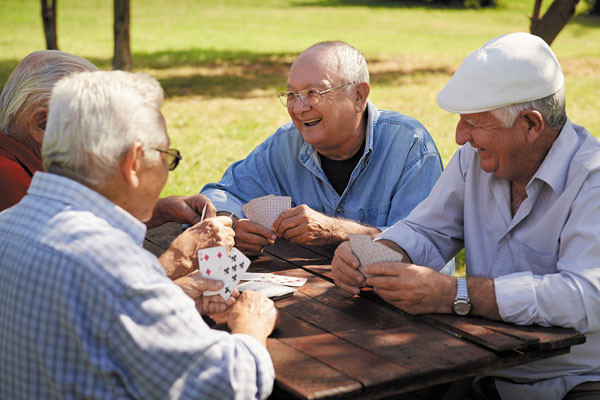
Many understand that proper diet and exercise are important for the health of seniors. Unfortunately, social connection is not given the same level of attention and importance, although the science shows that consistent positive social interactions are not just beneficial for improving mood – they are a biological necessity for maintaining neurological function in older individuals.
Why conversation is a full brain workout
When two individuals engage in a face-to-face conversation, the brain lights up like a pinball machine. Memories are being retrieved, language is being processed, emotional cues are being read, and responses are being formulated. This is not a passive process. This is what most mirrors interval training from a cognitive perspective.
It matters for neuroplasticity. The brain creates neural pathways by repeatedly firing a group of neurons in the same pattern. Neurons that fire together wire together. The more frequently this occurs, the stronger the connection becomes. Conversation – particularly if it includes some disagreement, humor, or elaboration – requires a number of different areas to fire together in coordination. Over time, this process creates additional reliability in the networks.
This is one of the reasons gerontologists have become interested in the concept of cognitive reserve – a cluster of protective mental attributes that helps maintain memory and general cognitive function in spite of brain tissue loss. If you have higher cognitive reserve, your brain can take a lot of vacancies before you start showing any real decline. It’s essentially a back-up generator of intelligence. Social withdrawal flips the process. As sensory input decreases and the brain is no longer challenged to process information from the outside world, it begins to slow down. The principle of “use it or lose it” is not just motivational speak; it’s a structural regulation of the brain. Neurons that stop firing lose their connections to neighboring neurons.
The biology of loneliness
Loneliness and solitude are not interchangeable. Isolation may actually rest the brain. However, over time, the impact of extended isolation can be devastating. People who experience chronic loneliness (a state of being, as opposed to occasional solitude) have a more active stress response than their peers, including higher ROS levels and cell mutations. Loneliness also leads to elevated cortisol levels, which suppress the immune system and raises inflammation. Inflammation is a slow and steady killer and causes neural degradation over time.
A comprehensive, seven-year study explored loneliness, social isolation, and living alone as predictors of dementia. All three made the list. Living alone is associated with 70% higher odds of developing dementia, loneliness with 40%. For social isolation, the number’s around 60%. A study found that highly lonely individuals face a 26% higher risk of dementia. The effect is substantial, enough that one writer likened isolation to cigarette smoking.
Practical solutions for isolated seniors
Recognizing that social interaction is a clinical need changes what we should mean when we say “quality care”. For a family caregiver, visits and phone calls aren’t just about offering comfort – they’re protective medical care. But family members aren’t always available or consistent, and it’s the consistency that generates the ongoing stimulation the brain needs.
That’s where in-home care services fill a genuine gap. Weekly visits from a trusted caregiver offer predictable, stimulating human interaction that isolated seniors wouldn’t otherwise have access to during the week. That consistency matters more than people tend to assume.
It’s not about imposing social responsibilities on older adults who would rather be left in peace. Rather, it’s about making sure their brains receive enough regular, crucial stimulation to preserve their independence for as long as possible. Some people get enough of that naturally from friends and family. Others need to find it in a more planned way.
Human connection is as scalable as nutrition, and as empirical in its impacts. Treating it that way, rather than as an optional extra, is the frontier for how we approach geriatric care.
Quality over quantity
Not all socializing is created equal, though. Passive group settings – sitting in a room together with a program on the television, say, or being in a party environment where little true socialization occurs – do not engage your executive function the way a one-on-one or even two-on-one interpersonal exchange does. It is actual conversation that humans require to keep our brains, the frontal and executive areas, humming along in good health.
True conversation is tough; it’s not passive, it usually demands hearing, thinking, and responding, and it engages almost every area of the brain. Reciprocal, meaningful exchanges are what exercise executive function – the planning, reasoning, and problem-solving skills that are among the first to show decline in cognitive impairment.
And if you are an older adult in conversation generally, or just in engagement with a much younger person, you are, as a rule, forced to bear with sequences, references, and language not within your daily repertoire. This builds new connections in the brain, sort of calisthenics or wind sprints for your intellect.
Social habits and physical health
Social connection doesn’t just protect the brain directly. It also shapes the behaviors that support brain health indirectly.
Seniors who maintain regular social routines tend to eat more consistently, take medications more reliably, and sleep better. That last point connects to circadian rhythms: social routines – a standing lunch, a weekly call, a regular visitor – help anchor the sleep-wake cycle, which is essential for the brain’s overnight clearing of metabolic waste. Sleep is when the brain cleans itself. A disrupted circadian rhythm interrupts that process.
Loneliness, by contrast, tends to unravel those routines. Meals become irregular. Medications get missed. Sleep deteriorates. The cognitive consequences compound.
Write and Win: Participate in Creative writing Contest & International Essay Contest and win fabulous prizes.
About the Author