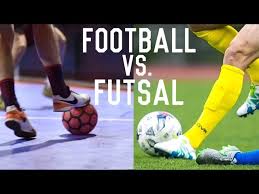
If you have ever picked a futsal ball and thought it was smaller or heavier than the regular soccer ball, you are not alone. One question players often ask: Are futsal balls really different from soccer balls?
The answer is yes. But to find out why these differences are so significant, we must understand the game itself, and how it is compared to soccer, and, particularly, how the design of the futsal’s unique ball differs in the way the game is played.
In this post, we will discuss a few differences between futsal and soccer balls, with some effective tips on choosing the right ball.
Understanding Futsal
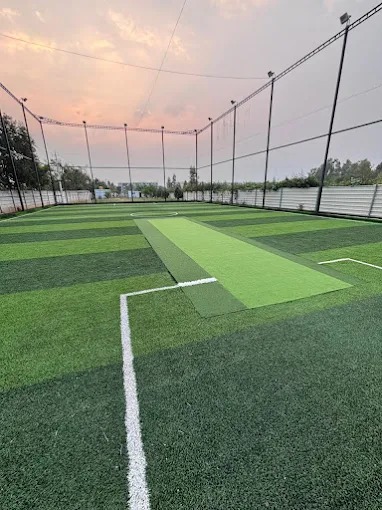
It is a small, fast-paced soccer version, which is normally an indoor game and played on a hard court and can be watched in Grada3. There are five players on each team, including the goalkeeper. It is played on a small playing area, which includes less space, more touches, quick passes, and nonstop play. Futsal is specifically big in Spain, Brazil, and Portugal, and many top professionals say they played futsal from a young age, and that is how they advanced their tight ball control and quick footwork.
Key Differences Between Futsal And Soccer Balls
Here are some of the important differences between futsal and soccer balls, which will help you make the right choice:
1. Size
Size is the biggest difference between the two. The standard soccer ball size is 5. Its girth is 68 to 70 cm, and it is used to play outdoors. While a futsal ball comes in size 4 or 3, and its circumference is 62 to 64 cm, which is ideal for adults. Smaller youth futsal balls with Size 3 are perfect for kids under 12. A smaller ball is easy to control in less space. Players can pass, trap, and squirt more easily on hard indoor court surfaces.
2. Weight
The weight of futsal balls is usually heavier than that of a conventional soccer ball. A standard soccer ball weighs approximately 410 to 450 grams, and a futsal ball weighs between 400 and 440 grams, as it is smaller, it feels heavier and does not have the floaty kick effect. The additional weight helps in keeping the ball down. In futsal, the ball requires playing well, and low and fast to let quick passes and control. Light balls bounce too much off the hard court, which is one more difference to consider.
3. Bounce
Bounciness of a futsal ball is one of its signature features. It is made to have 30% lower bounce rates. It bounces between 50 and 65 cm off the floor when dropped from a height of 2 meters, and a soccer ball bounces between 120 and 150 cm. It is this lack of bounciness that makes ground play a defender. Players keep the ball rushing all over the ground with acute passes and close dribbles. They do not depend on extended, high passes. While a soccer ball is known for high bounces, as in headers, extended passes, and crosses.
4. Material And Construction
From a quick glance, futsal balls and soccer balls do not look different from each other, fabricated leather panels sewn together with an inner bladder. But there are still a few design tweaks, such as:
A. Outer Cover
The outer cover of futsal balls is made of a quality PU or PVC material. The outer cover is normally softer to make it simpler to drift on indoor courts.
B. Bladder
Many futsal balls feature a foam cover or unique lining to decrease bounce and allow for a better initial touch.
C. Panels
Futsal balls have 32 panels similar to soccer balls, but the stitching is compact to keep the ball round and reduce air leakage.
Do The Differences Affect The Game?
These are not inconsistent design options; they show how futsal is played:
1. Improved Control
The ball with a low bounce allows for higher control than the mini ball. Thanks to its bigger size, it is perfect for keeping close, allowing for better control and quick passing.
2. Less Elevated Play
This is not a game of long crosses or headballs; it remains grounded, calling for faster feet and sharper moves.
3. Skills Development
Futsal balls are usually employed in youth training. The lighter weight and smaller size improve ball control and touch.
Can You Play A Futsal Game With A Soccer Ball?
Yes, but it is not the best solution. Playing with a conventional soccer ball on a futsal court will come out as a bouncier soccer ball that rolls all over the court very fast. It changes the playing style, and it abandons the point of futsal’s rigid technical game. On the same note, you possibly would not want to use a futsal ball for outdoor play, as the increased weight and decreased bounce do not go well on turf or grass.
Tips To Select The Right Ball for You
If you are all set to buy a futsal ball, here are a few quick tips:
1. Check Size
Adults require a size 4 while kids below 12 can go with size 3.
2. Consider Official Certification
Quality brands make futsal balls that adhere to FIFA or AMF standards.
3. Think About Surface
For hard courts, you can choose a ball with augmented panels for rigid surfaces.
4. Check the Bounce
A quality futsal ball is capable of rebounding low and not being really bouncy.
Final Words
As futsal and conventional soccer have the same roots, a slight change in their balls is a depiction of the ways each game has its individual rhythm and style. The smaller and heavier futsal balls reduce bounce and provide a perfect surface for players to grow or show their skills and tactics in the fast-moving environment of the game. So whenever you walk onto the court, make sure you choose the right ball from Vizari Sports, an official shop for all types and sizes of balls, and feel the difference for yourself.
Write and Win: Participate in Creative writing Contest & International Essay Contest and win fabulous prizes.
About the Author