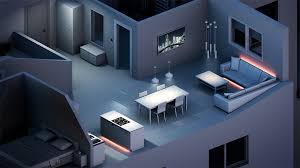
About Future of Home Automation:
Introduction:
Homeowners are looking for more intelligent and effective ways to handle their everyday tasks as modern life gets busier. The need for creative solutions is fueled by the difficulty of balancing personal comfort, home maintenance, and energy expenses.
Thankfully, these issues should be resolved in the future of smart houses. Advanced artificial intelligence (AI), automation, and sustainable technologies will turn houses into customized, environmentally friendly retreats over the course of the next ten years. These technologies will automate tasks, optimize energy use, integrate health and wellness systems, and improve comfort and convenience.
AI-Powered Customization
Customizing your surroundings to meet all of your demands, even the most specific ones, is the main goal of the smart home age. Homeowners are actually interested in places like Idaho, which has stunning landscapes and outdoor lifestyles, as well as home technologies that would go well with their surroundings. This trend is beginning to spread from urban city centers to the most picturesque and picturesque rural areas.
Advanced AI systems will soon revolutionize home automation, going well beyond basic voice commands or preset routines, whether you’re looking at Driggs, Idaho real estate or intend to enhance your current house. By anticipating your demands, these systems will be able to design a house that fits your way of life. Imagine your home making your coffee as soon as you wake up, or even modifying the temperature and lighting according to your daily schedule.
However, predictive analysis—foreseeing difficulties before they happen—is where AI really shines. This way, systems and appliances will automatically identify potential problems and plan fixes, reducing downtime. The future will be extremely individualized; every aspect of a space will be adjusted for convenience, effectiveness, and comfort.
Energy Efficiency and Sustainability
In the future, smart houses will help to improve sustainability and energy efficiency while addressing a number of climate change-related issues. These residences are intended to be built in a manner that minimizes environmental damage and lowers homeowner expenses.
In the future, houses will optimize energy use in real time and automatically modify to cut down on waste. The emergence of zero-energy homes, which are outfitted with cutting-edge energy management systems and renewable energy sources like solar panels and batteries to make dwellings self-sufficient, will be another ground-breaking development.
Greywater recycling, smart irrigation, leak detection systems, and other techniques that guarantee more effective use of every drop will also promote water conservation.
Home automation and robotic assistants
Robotic assistants and automated systems will become commonplace in homes in the upcoming ten years, completely changing the way we carry out daily jobs and household chores. In the kitchen, robotic arms will act as personal chefs, creating meals based on nutritional requirements and dietary preferences, replenishing groceries when supplies run low, and even cleaning up after themselves.
Cooking won’t be a stressful chore thanks to these robots, which will ensure accuracy, consistency, and ease. Additionally there will be restrooms equipped with health-monitoring sensors, which will assist track vital indicators and identify early disease symptoms.
Advanced robots driven by AI will vacuum, mop, and identify things to steer clear of while cleaning. Smart home integration that can clean several surfaces will guarantee a clean home with little work.
Integration of Wellness and Health Monitoring
Future smart homes will put health and wellbeing first, improving daily comfort and security. Here’s how:
Smart Furniture:
Mattresses will monitor sleep habits and make necessary adjustments to promote better sleep. Chairs will keep an eye on your posture and recommend adjustments as necessary. Mirrors can also be used to evaluate the condition of the skin and suggest skincare practices.
AI-Powered Home Gyms:
AI trainers in smart gyms will customize your workout regimens, modify exercises to suit your demands, and provide real-time form feedback. To make workouts more interesting, some systems will even use virtual reality.
Home Health Monitoring:
By identifying early indicators of possible health problems and guaranteeing prompt prevention and wellness management, diagnostic equipment such as smart mirrors and toilets will offer daily health checkups.
Your house will become the focal point of your fitness and health journey thanks to this integrated technology, which combines convenience with individualized care.
Improved Security with Biometric and AI Systems
AI and biometric technology will play a major role in home security in the future, making our houses safer and more secure.
AI-Based Surveillance:
AI will be used in smart homes to analyze security footage in real time and differentiate between dangers and routine behavior. By identifying patterns, these systems will be able to identify pets and known faces. They will also be able to integrate with other smart devices to automatically lock doors or sound alarms when necessary.
Biometric Access Controls:
Conventional keys will eventually become obsolete. Using facial recognition and fingerprints will make it easy and safe to enter your house. You may provide visitors or service providers temporary access with this technology, which also removes the worry of misplaced keys. Additionally, it uses multi-factor authentication to improve security.
Proactive Threat Detection:
AI will also keep an eye out for odd noises, motions, or environmental dangers like gas leaks as part of proactive threat detection. It will also defend your home network from online attacks and potentially work with other security systems in the neighborhood to provide even more safety.
These developments will guarantee that home security systems provide a safer, more intelligent living environment by preventing dangers before they arise rather than just responding to them.
Features of Smart Homes now and in the Future
Let’s examine some of the most important aspects of modern smart homes and what to anticipate in the upcoming ten years in order to gain a better understanding of how smart home technology has evolved:
| Feature | Current Smart Homes | Future Smart Homes (2030) |
| AI Integration | Preset procedures and simple voice | Deep learning and prediction capabilities of advanced AI |
| Management of Energy | Energy-efficient appliances and intelligent | thermostatsCompletely integrated smart grids and energy-efficient residences |
| Automation at Home | Limited automation of certain jobs | Complete automation of everyday routines and household tasks |
| Health Tracking | Wearables for tracking basic fitness | Using furniture and fixtures to integrate health diagnosis |
| Security systems | smart locks and camera-based surveillance | Threat detection with AI and biometric access restrictions |
| Individualization | User-specified preferences and settings | Deep personalization powered by AI that adjusts to each person’s demands |
| Sustainability | Smart meters and energy-efficient appliances | All-inclusive energy and water conservation systems |
| Connectivity | Devices with Bluetooth and Wi-Fi capabilities | 5G and beyond advanced IoT integration |
| Interface | Voice assistants and smart-phone apps | Interfaces between the brain and computer and holographic displays |
| Maintenance | Reactive repairs and manual scheduling | Self-repairing and predictive
maintenance systems |
Final Thoughts
With cutting-edge technology, eco-friendly solutions, and customized experiences, smart homes have the potential to improve our quality of life. Our living areas will change to become more user-friendly and sensitive to human demands as AI, smart energy systems, and health monitoring technologies are integrated. A healthier, more sustainable lifestyle as well as greater convenience and efficiency will result from this.
FAQs
- What will the future of smart homes look like?
Ans: Future smart homes will be powered by AI, IoT devices, and renewable energy sources to enable more automation, personalization, and proactive health monitoring, resulting in more efficient living environments.
- What are the smart home projections ?
Ans: According to projections, both the market’s overall value and the use of smart home technologies are expected to rise. The way we interact with our homes is evolving due to developments in the fields of artificial intelligence, energy efficiency, and security.
- In ten years, how will a smart home be to look and live at?
Ans: In ten years, smart homes will advance in automation, smart furnishings, and integrated health monitoring to provide a customized space that anticipates human demands and encourages sustainability.
About the Author